

Ever wondered why some students learn complex songs fast, while others take months? It’s not just about how many hours you play. It’s about how you play them.
The Pareto Principle says eighty percent of results come from twenty percent of efforts. This rule applies to music too. It helps you find the most important practice habits for quick progress. By focusing on these, you avoid getting stuck in endless repetition.
Using this intentional approach makes your practice sessions more effective. You’ll reach your goals faster and feel more confident.
Key Takeaways
- Focus on high-impact practice sessions to accelerate your musical progress.
- Avoid burnout by prioritizing quality over the total quantity of practice time.
- Identify the most effective exercises that yield the best results for your skill level.
- Use intentional habits to replace aimless repetition during your daily routine.
- Achieve faster mastery by applying the Pareto Principle to your learning journey.
Understanding the Pareto Principle in Music Learning
The secret to growing fast in music often lies in using the Pareto Principle wisely. Many think success comes from just playing a lot. But, piano learning techniques show that’s not true. By applying the pareto principle in piano practice, you can find the key exercises that improve your playing the most.
Defining the 80/20 Rule
The 80/20 rule piano explanation comes from economics. It says 80% of results come from 20% of causes. In music, this means a small part of your practice routine does most of the work. Focusing on these areas helps you avoid wasting time.
Getting the pareto principle piano means checking your daily habits. You might find that learning a few key chord progressions is more valuable than endless scale drills. This change in thinking is the first step to becoming a more focused musician.
Why Efficiency Matters for Piano Beginners
For beginners, being efficient in practice is key to moving forward. With little time to practice, you can’t waste it on less useful activities. By focusing your efforts, every minute at the piano helps you reach your goals.
The table below shows how to focus your practice for better results:
| Practice Focus | Traditional Approach | Pareto-Optimized Approach |
|---|---|---|
| Technical Drills | Playing every scale daily | Targeting weak finger transitions |
| Repertoire | Learning entire pieces at once | Focusing on difficult measures |
| Theory | Memorizing abstract rules | Applying chords to current songs |
| Outcome | Slow, inconsistent growth | Rapid, measurable progress |
By following this piano practice efficiency rule, you change how you relate to your instrument. Understanding the importance of the 80/20 rule in piano playing lets you control your musical path. Soon, you’ll see that working smarter is the best way to master music.
What is the 80/20 rule piano?
The Pareto principle in piano practice is a guide for quick skill growth. It helps you use your limited practice time wisely. By focusing on key techniques, you can achieve top results without endless hours of practice.
Mastering piano with the 80/20 rule means focusing on quality over quantity. You find the specific parts that cause the most trouble. This targeted effort leads to clear progress.
Identifying the Vital 20 Percent of Skills
To use the piano 80/20 rule, first review your music. Most songs have a few tough spots that take up most of your practice time. By focusing on these areas, you can overcome technical challenges faster.
Some say the 90/10 rule is even better. It suggests 90% of your improvement comes from just 10% of your music. This shows how the importance of the 80/20 rule in piano playing can make your practice more efficient. You spend less time on easy parts and more on hard ones.
| Practice Method | Focus Area | Expected Outcome |
|---|---|---|
| Traditional | Playing from start to finish | Slow, uneven progress |
| Pareto Principle Piano | Isolating difficult 20% | Rapid technical mastery |
| Aggressive 90/10 | Targeting 10% hardest bars | Maximum efficiency |
The Relationship Between Music Theory and Practice
Grasping the 80/20 rule music learning needs a good music theory base. Theory helps you spot patterns, chord progressions, and scales in your music. Instead of memorizing every note, you understand the music’s structure.
This understanding speeds up learning complex pieces. Seeing music as a mix of familiar concepts reduces mental effort. You can then focus on improving your playing and expression.
Prioritizing Your Piano Practice Routine
Mastering the piano is not about playing for hours. It’s about making every minute count. Focus on optimizing piano practice by choosing activities that give you the most results. The piano 80/20 rule helps you make sure every session moves you closer to your goals.
Focusing on High-Impact Exercises
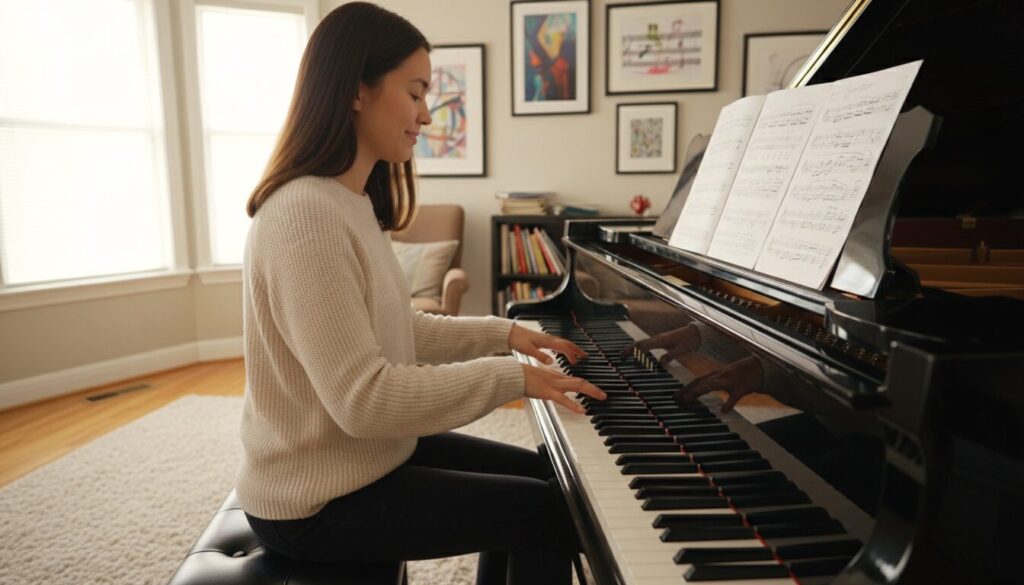
Improving your piano playing technique starts with slow, deliberate practice. Use a metronome at a slow tempo to build precise muscle memory. This optimal piano practice technique helps your brain and fingers work together perfectly.
When you prioritize piano practice, spend most of your time on exercises that challenge you. Work on scales, arpeggios, and specific passages that need extra effort. This targeted approach is key to piano practice efficiency and mastering complex pieces quickly.
Eliminating Low-Yield Repetitive Drills
Many students waste time on repetitive drills that don’t really improve their piano technique. These exercises might feel like they’re helping, but they’re not. Identify and cut out these low-yield tasks to boost your piano practice productivity.
Instead of repeating easy parts, focus on the hard parts that need your attention. This piano practice efficiency rule prevents burnout and keeps your practice sessions interesting. These piano practice tips help you work smarter, not harder, as you improve your skills.
Optimizing Piano Learning for Faster Progress
Learning piano isn’t just about playing more. It’s about using your time wisely. By using piano learning techniques effectively, you can make every practice session count. This way, every minute at the piano helps you grow.

Mastering Essential Chords and Scales
Building a strong foundation is key to maximizing piano progress. Before diving into complex music, learn the basics. Chords and scales are the foundation of all music you’ll play.
Focus on these basics to save time later. Knowing the music’s structure helps you play with confidence. Here are some daily essentials to focus on:
- Major and minor scales in all keys.
- Primary triads and their inversions.
- Common chord progressions found in popular music.
“The secret to playing well is not just in the fingers, but in the clarity of the mind and the efficiency of the movement.”
Applying the Rule to Repertoire Selection
A good piano learning strategy means choosing music that’s challenging but not overwhelming. Pick pieces that match your skill level and introduce new concepts. This balance keeps you motivated and learning efficiently.
To master piano using the 80/20 rule, break your music into small parts. Focus on 2-4 bar sections that need the most work. This piano technique improvement helps you perfect tough spots quickly.
Using this method boosts your piano playing technique fast. Focused practice on small sections beats endless repetition. Aim to improve your piano technique with purpose every day.
Effective Piano Practice Methods for Long-Term Success
Mastering the piano doesn’t mean endless hours of repetition. Focus on efficiency in piano practice to make progress, even with a busy schedule. Using effective piano practice methods helps you improve without feeling overwhelmed.
Time Management Strategies for Busy Students
Boost your piano practice productivity by organizing your day better. You don’t need long, uninterrupted blocks to see results. Instead, try piano practice time management with short, intense sessions of 15 to 20 minutes.
These efficient piano training techniques keep your brain sharp. Treating practice as focused sprints prevents fatigue and bad habits. This method keeps your musical growth on track, even with a busy life.
Consistency Over Intensity
Real growth in efficient piano playing comes from daily practice, not long, irregular sessions. A consistent piano practice schedule builds muscle memory and retention faster. Daily practice creates a lasting path to your goals.
To keep an effective piano practice strategy, focus on active error detection. Identify trouble spots and work on them until you master them. These piano practice tips keep you motivated by showing your progress.
Remember, an optimal piano practice technique includes self-monitoring and reflection. With a clear plan, every minute of efficient piano practice moves you forward. Celebrate small wins, as they are the foundation of your success.
Resources and Professional Guidance at Vesta Piano
Finding the right support can change your practice into a journey of quick growth. When you focus on piano skill development, having a plan is key to avoid getting stuck. Professional help makes sure your efforts are focused on the best parts of your musical growth.
How Vesta Piano Supports Your Musical Journey
At www.vestapiano.ca, you get access to learning paths made to help you maximize your talent. An effective piano practice strategy helps you beat tough technical challenges. These tools are made to help you use effective piano practice methods for steady progress.
The site aims to maximize piano progress with clear steps for all students. Having a pro mentor keeps you motivated and on track with your goals. This setup is the secret to making your musical dreams come true.
Leveraging Expert Techniques for Skill Development
To really shine, you need to learn to prioritize piano practice around your busy life. Mastering piano practice time management lets you make the most of every session, even when time is tight. By using efficient piano training techniques, your hands and mind work together perfectly.
Every piano mastery technique we share is aimed at improving your habits and cutting down on wasted time. You’ll see that precision and consistency are more important than endless repetition. With the right advice, you can reach piano mastery while keeping your love for music strong.
Conclusion
You now have the tools to make your practice sessions more effective. Learning about the 80/20 rule piano helps you focus on quality over quantity. This shift can unlock your full musical ability.
To improve your piano skills, find and work on the toughest parts of your music. This method leads to quicker progress and less stress. It keeps your learning journey rewarding and steady.
Playing piano efficiently means working smart, not hard. It’s about finding a balance that keeps you motivated and enjoying the journey. This approach helps you grow and enjoy playing piano for years to come.
By following the 80/20 rule, you can achieve true mastery of piano. Stay committed to focused practice, and you’ll see amazing results. For more help, visit www.vestapiano.ca and start your path to musical excellence today.
FAQ
What is the 80/20 rule piano explanation and how does it benefit beginners?
The 80/20 rule in piano is based on the Pareto Principle. It says 80% of your progress comes from 20% of your efforts. For beginners, it means finding the most important piano techniques that give the best results.
By focusing on these key techniques, you can avoid getting stuck and make progress from the start.
How can I achieve faster piano mastery through the 80/20 rule?
To master piano quickly, find the “vital 20 percent” of your music. This are the 2-4 bar sections that are the toughest. Instead of playing the whole piece, work on these sections one by one.
This method ensures you focus on the most challenging parts, helping you improve faster.
Why should I prioritize high-impact exercises over repetitive drills?
Many students waste time on repetitive drills that don’t really help. Instead, focus on high-impact exercises. For example, use a metronome at a slow tempo to build muscle memory.
This approach makes every minute at the piano count, helping you progress faster.
How does music theory contribute to an optimal piano practice technique?
Music theory is like a map for your piano journey. Learning essential chords and scales helps you recognize patterns in complex pieces. This makes learning them faster.
It’s a key part of efficient playing, letting you spend less time guessing notes and more time improving your technique.
What are the best piano practice time management tips for busy students?
Good time management means being consistent, not intense. Short, focused practice sessions of 15 to 30 minutes are more effective than long, sporadic ones.
By practicing with error detection and self-monitoring, you can stay productive even with a busy schedule.
What is the 90/10 rule variation in piano practice efficiency?
The 90/10 rule is a more extreme version of the Pareto Principle. It says 90% of your improvement comes from 10% of your music. By focusing on the toughest technical parts, you can improve faster.
What is the 90/10 rule variation in piano practice efficiency?
The 90/10 rule is a more extreme version of the Pareto Principle. It says 90% of your improvement comes from 10% of your music. By focusing on the toughest technical parts, you can improve faster.
How does Vesta Piano help students with optimizing piano practice?
Vesta Piano, at www.vestapiano.ca, offers expert guidance and structured learning paths. They help you learn piano efficiently. With their tips and resources, you can improve your habits, overcome challenges, and use the best practice methods.