

Ever thought your musical instrument might be losing its soul in your living room? Many think their instrument stays perfect if they don’t play every day. This is a dangerous misconception.
Inside your piano, hundreds of steel strings are under huge pressure, sometimes up to 90 kilograms each. This high tension is very sensitive to changes in humidity and temperature at home. Knowing the importance of regular piano tuning is key to protecting your investment.
Ignoring this upkeep can cause more than just bad sounds; it can harm the piano’s structure. By choosing professional care, you keep your instrument valuable and sounding great for years. Let’s see why regular service is essential for every serious player.
Key Takeaways
- Strings exert massive pressure, requiring professional adjustments to maintain stability.
- Environmental shifts in Canadian homes significantly impact internal string tension.
- Regular maintenance prevents long-term structural damage to the soundboard and frame.
- Consistent service preserves the financial and artistic value of your instrument.
- Expert care ensures your equipment remains responsive and pleasant to play.
Understanding the factors that influence how long can a piano go without tuning?
Finding the right piano tuning frequency involves many factors. People often think pianos stay the same, but they’re actually dynamic. Several factors affecting piano tuning work together to move your piano away from its original pitch.
To keep your piano in great condition, consider these main factors:
- Seasonal humidity changes in your home.
- The huge tension in the strings.
- How often and how hard you play it.
The impact of Canadian climate and humidity fluctuations
In Canada, the seasons bring big challenges for wooden instruments. Humidity changes make the soundboard inside your piano expand and shrink. This changes the string tension.
In humid summers, the soundboard swells, making the strings tighter and the pitch higher. In dry winters, the wood shrinks, lowering the pitch. These changes are why regular maintenance is crucial for keeping your piano stable.
Mechanical wear and the role of string tension
A piano is always under a lot of stress. Each string is pulled with about 90 kilograms of force. With over 200 strings, the total force on the frame is huge.
Even if you don’t play it, this pressure stretches the strings and settles the wood. Regular piano tuning intervals help manage this. Without tuning, the pitch can become uneven across the keyboard.
Frequency of use and its effect on pitch stability
Wondering how long can a piano go without tuning? if it’s not played often? While playing a lot wears out parts, even a rarely played piano loses its tuning due to environmental factors.
But playing a lot can also make the tuning pins shift, especially with a strong touch. If you play a lot, like a professional or student, your piano will need more frequent tuning. Finding the right balance between playing and maintenance keeps your piano in tune.
Comparing professional maintenance schedules for different piano types
Not all pianos are the same, and they need different care. Knowing this helps you create a good piano maintenance schedule. This schedule keeps your piano in great shape for a long time.
Grand pianos versus upright pianos: Tuning requirements
Grand and upright pianos use similar parts but are set up differently. This affects how they tune. Grand pianos have longer strings and a more complex setup, making them more sensitive to changes.
Upright pianos, on the other hand, are often against walls. This can help keep their temperature steady. But, your piano tuning frequency depends on how often you play and your home’s stability.
“A piano is a living, breathing machine that requires consistent care to maintain its voice and structural integrity.”
New pianos versus vintage instruments: The break-in period
New pianos need special care in the first year. They need four tunings to settle properly. This ensures they sound great for years.
Vintage pianos need a different approach. Their wood and metal have already settled. But, they still need regular tuning to avoid damage.
Performance-grade instruments versus home practice pianos
How much you play affects your piano’s tuning needs. Pianos used a lot, like in concerts, need tuning often. This keeps them sounding perfect.
Home pianos get less use but still need regular care. The table below shows how much use affects tuning needs:
| Instrument Type | Usage Level | Recommended Frequency |
|---|---|---|
| Performance Grand | High/Professional | Monthly |
| Standard Upright | Moderate/Home | Bi-annually |
| Vintage/Antique | Light/Occasional | Annually |
By matching your care to your piano’s needs, it will always be a pleasure to play. Consistency is the key to keeping your piano in top condition.
Consequences of infrequent piano tuning

Not tuning your piano can cause more than just bad sound. It affects the delicate balance of your instrument. Knowing the effects of not tuning is key to keeping your piano in good shape for years.
Pitch drift and the risk of permanent damage
A piano is incredibly tense, with strings under 20 tons of pressure. If you don’t tune it regularly, it starts to lose its balance. This is called pitch drift, which can make the frame and soundboard shift.
This stress can cause permanent damage if not fixed. The wood might warp or crack, making it hard to tune the piano back. Consistency is the key to avoiding these problems.
The cost of pitch raises versus regular maintenance
Some think skipping tune-ups saves money. But, the cost of a pitch raise is much higher than regular tuning. A tune and check usually costs $100 to $200, which is a small price for keeping your piano healthy.
“An ounce of prevention is worth a pound of cure, especially when dealing with the complex mechanics of a fine piano.”
When a piano is far from concert pitch, fixing it is hard. Technicians have to do extra work, which strains the piano. Regular maintenance is the best way to avoid these costly repairs.
How neglected tuning affects your ear and musical development
Regular tuning is important for your piano’s health and your music skills. If you play on an out-of-tune piano, it can slow your progress. Your ears adjust to the pitch of the instrument you play every day.
Playing on a piano that’s always off can mess up your sense of pitch. Recognizing the need for regular tuning helps keep your musical ear sharp. The importance of piano tuning is crucial for your musical growth and education.
Signs your piano needs professional attention
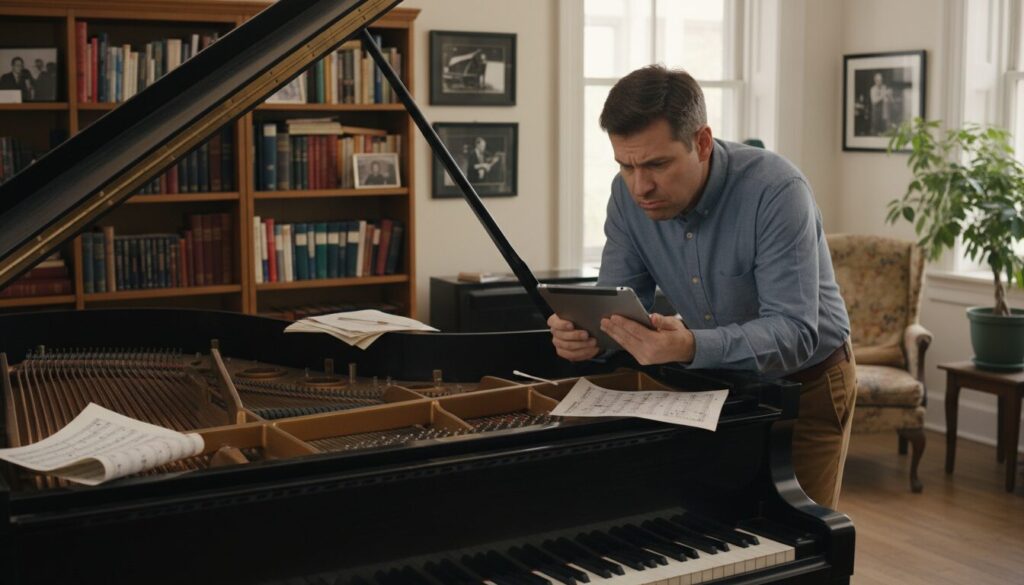
Spotting early signs of piano trouble can save you from expensive fixes later. Ignoring small changes can lead to big problems. Keeping an eye on your piano helps it stay a joy to play for years.
Identifying sour notes and uneven tension
Common signs your piano needs tuning include its sound during practice. If chords sound muddy or keys lack clarity, it’s time for a tune-up.
- Keys that sound “sour” or dissonant when played together.
- A noticeable lack of sustain in the upper registers.
- Uneven resistance or “sticky” keys that do not respond to your touch.
These signs often mean the string tension is off. Fixing this early prevents bigger problems with the piano’s action.
Physical indicators of internal piano stress
Look beyond sound for signs of stress. The impact of not tuning piano shows in the wood, reacting to your home’s changes.
Watch for these physical signs:
- Loose tuning pins that fail to hold the string tension.
- Visible cracks or warping in the soundboard.
- Rust or oxidation appearing on the strings or metal plate.
Ignoring these signs can cause serious damage. This is much more costly than regular tuning. Catching problems early is key to avoiding big repairs.
When to call a professional from www.vestapiano.ca
Only a skilled pro can keep your piano in top shape. If you see any of the mentioned signs, it’s time to call piano tuning experts at www.vestapiano.ca.
Using professional piano tuners keeps your piano playing well. While tuning costs might seem high, it’s cheaper than fixing major problems. A qualified technician gives your piano the care it needs.
Best practices for extending time between piano tunings
Following simple care habits can help you extend the time between professional visits. The best way to do this is by managing your piano’s surroundings. This piano care guide will help you protect your investment and enjoy a consistent sound for years.
Controlling your home environment for optimal stability
Pianos are very sensitive to moisture in the air. In Canada, the humidity changes a lot with the seasons. This affects the soundboard and pinblock.
Using a humidity control system is a great piano maintenance tip. It keeps the moisture level steady. This prevents the wood from expanding or contracting too much.
Proper placement of your piano away from vents and windows
Where you place your piano is crucial. Avoid putting it near heating vents, air conditioning, or drafty windows. Direct sunlight and sudden temperature changes can cause the pitch to shift.
Place your piano on an interior wall to protect it from outdoor temperature changes. This helps keep the environment consistent. Consistent placement is key to a good piano maintenance schedule.
Routine care tips to maintain internal components
Regular piano care is more than just watching the environment. Keep the lid closed when not in use to protect the strings and action from dust. Dust can make the keys slow and wear out the mechanical parts over time.
Having a reliable piano tuning schedule helps catch small issues before they become big problems. Use the table below to track your maintenance and keep your piano in top shape.
| Maintenance Task | Frequency | Benefit |
|---|---|---|
| Humidity Monitoring | Daily | Prevents wood warping |
| Professional Tuning | Bi-Annually | Ensures pitch accuracy |
| Dusting Keys/Case | Weekly | Protects finish and action |
| Action Inspection | Annually | Extends component life |
By following these piano care tips, you reduce the stress on your piano. Consistent care is the secret to a long-lasting, beautiful sound.
Conclusion
Your piano is a complex machine that needs regular care to sound great. By following these tips, your piano will bring joy for many years.
Regular tuning is key for those who love good sound. Professional maintenance keeps your piano safe from Canada’s harsh weather.
With the right care, you can go longer between tunings. This guide helps you keep an eye on humidity and temperature changes.
Working with professional tuners gives you peace of mind. They have the skills for keeping your piano in top shape.
Staying on a maintenance schedule saves you from expensive repairs. Regular tuning keeps your piano in perfect condition. Contact Vesta Piano to book your next service.
FAQ
The impact of Canadian climate and humidity fluctuations
The Canadian climate is tough on pianos because of its big changes in weather. Pianos are made of wood, which changes size with the humidity. In humid summers, the soundboard swells, making the strings tighter. In dry winters, it shrinks, making them looser.
This back and forth makes it hard for a piano to stay in tune for long. It needs regular tuning to keep its sound right.
Mechanical wear and the role of string tension
Pianos are always under stress, even if they’re not played. The strings, which are very tight, stretch over time. This causes the piano to go out of tune.
Understanding how the strings work is key to knowing why tuning is so important.
Frequency of use and its effect on pitch stability
Playing the piano often also affects its tuning. When you play, the strings vibrate, which can make the tuning pins shift. This means pianos played a lot need to be tuned more often.
Grand pianos versus upright pianos: Tuning requirements
Grand pianos are tuned more often because they’re used in concerts. But, even upright pianos need regular tuning to stay in good shape. This helps keep the piano sounding great and lasting longer.
New pianos versus vintage instruments: The break-in period
New pianos need tuning more often in the first year. This lets the strings settle and the wood adjust. Older pianos might need special care to stay in tune.
Performance-grade instruments versus home practice pianos
How often you tune your piano depends on how you use it. Pianos for concerts need tuning before each use. But, pianos for home practice can usually go a bit longer between tunings.
Pitch drift and the risk of permanent damage
Not tuning your piano can cause it to sound bad and even damage it. The soundboard can lose its shape, leading to big problems. This can be expensive to fix.
The cost of pitch raises versus regular maintenance
Skipping tunings to save money can cost more in the long run. If you wait too long, you’ll need a costly pitch raise. Regular tunings are cheaper and keep your piano in better shape.
How neglected tuning affects your ear and musical development
Playing an out-of-tune piano can hurt your musical skills. It makes it hard to learn the right notes. This can make playing with others or singing in tune difficult.
Identifying sour notes and uneven tension
Bad notes or a “twangy” sound mean your piano needs tuning. These problems show the piano is out of tune. It’s time to call a professional.
Physical indicators of internal piano stress
Look for signs like loose pins or a warped soundboard. These show your piano is under stress. If you see cracks or uneven keys, it’s time for help.
When to call a professional from www.vestapiano.ca
If you notice any of these problems, call Vesta Piano. They can tune your piano and check it’s working right. This keeps your piano in top shape.
Controlling your home environment for optimal stability
Keeping your home’s humidity level steady helps your piano stay in tune. Use a system like the Piano Life Saver to control humidity. This protects your piano from extreme weather changes.
Proper placement of your piano away from vents and windows
Place your piano in a spot away from drafts and direct sunlight. This helps it stay in tune longer. Keeping it away from vents and windows is a key part of piano care.
Routine care tips to maintain internal components
Keep your piano clean and avoid spills on the case. Dust can harm the strings and soundboard. Regular care and maintenance help your piano sound great between tunings.
How long can a piano go without tuning before it is damaged?
A piano can last for years without tuning, but neglecting it can cause problems. To avoid damage, tune your piano at least once a year. Regular service keeps it sounding good.
Why is the importance of regular piano tuning so high for new instruments?
New pianos need tuning often because their strings and wood are still adjusting. Experts at Vesta Piano recommend tuning them four times in the first year. This ensures they stay in tune.
Does the Canadian climate really affect my piano’s tuning?
Yes, Canada’s weather is hard on pianos because of the big humidity changes. These changes make the soundboard expand and contract. Keeping your piano in a stable humidity helps it stay in tune.
What is the average piano tuning cost in North America?
The cost of tuning a piano varies, but it’s usually between 0 and 0. Neglecting your piano can lead to extra costs for repairs. Regular maintenance is cheaper in the long run.
Are there specific signs piano needs tuning that I can listen for?
Yes, listen for sour notes or a “twangy” sound. If the octaves sound off, it’s time for a tune-up. Contacting professional tuners from www.vestapiano.ca will fix these problems.
How can I help in keeping piano in tune for longer periods?
Keep your piano away from drafts and direct sunlight. Using a Piano Life Saver system also helps. These steps help your piano stay in tune longer.
Is a piano maintenance schedule different for grand and upright pianos?
Grand pianos need more frequent tuning because they’re used for concerts. But, upright pianos also need regular tuning to stay in good shape. A consistent schedule is key for both types.