

Have you ever wondered how some pianists create such rich and expressive sounds? The secret often lies in their mastery of the piano pedals. These foot-operated levers are not just accessories; they are essential tools that can transform your playing.
Modern pianos typically feature three pedals: the sustain, sostenuto, and soft pedals. Each one plays a unique role in shaping the sound and character of the music. The sustain pedal, often referred to as the “soul of the piano,” allows notes to resonate and connect, creating a lush soundscape.
Meanwhile, the sostenuto pedal offers selective sustain, letting certain notes ring out while others remain quiet. The soft pedal, on the other hand, modifies both volume and tone, adding a delicate touch to your performance.
Mastering these pedals opens up a world of possibilities, enhancing your musical expression and elevating your skills. This guide will explore each pedal’s function and provide tips for effective usage, ensuring you can elevate your piano playing to new heights.
Key Takeaways
- Discover how the pedals transform basic notes into expressive music.
- Understand that pedals are essential tools for shaping sound.
- Learn the sustain pedal’s role in creating resonant soundscapes.
- Explore the selective sustain offered by the sostenuto pedal.
- Find out how the soft pedal modifies volume and tone.
- Recognize that mastering pedals adds depth to your music.
- Get introduced to proper pedal technique for enhanced performance.
Introduction: The Role and Importance of Piano Pedals
Creating captivating piano music involves more than just pressing keys; it requires skillful pedal action. The pedals on your instrument are essential tools that enrich the sound and dynamics of your playing. By utilizing these foot-operated levers, you can shape the emotional impact of every piece.
Understanding how to use the pedals effectively allows you to sustain notes, soften tones, and create effects that your fingers alone cannot achieve. The action of pressing a pedal alters the mechanical workings inside your piano, lifting dampers off strings or shifting hammers to transform the sound completely.
Historically, the evolution of pedal use in piano playing dates back to the early days of Cristofori’s invention. Today, most modern pianos feature a three-pedal configuration, providing players with a versatile range of expressive capabilities.
While beginners should focus on mastering hand coordination first, incorporating pedals later can elevate your playing to a more professional level. Acoustic pianos typically include two or three pedals, while digital pianos often have pedal inputs sold separately. It’s vital to understand each pedal’s function before making a purchase.
The sustain pedal, soft pedal, and sostenuto pedal each serve distinct functions, allowing you complete control over the tone and resonance of your music. Legendary pianists, like Artur Rubinstein, referred to the sustain pedal as the “soul of the piano,” underscoring its importance in creating beautiful sound.
As you embark on your journey to mastering pedal technique, resources like www.vestapiano.ca can provide expert advice tailored for Canadian piano students and enthusiasts. Embrace the idea that mastering these pedals will transform your playing from simple note-reading into rich, layered, and emotionally compelling performances.
What Are the Three Piano Pedals For?
To unlock the full potential of your piano, it’s essential to grasp how pedals influence sound. Each pedal plays a unique role in enhancing your musical expression. Understanding their functions will help you create richer and more dynamic performances.
Sustain Pedal (Right): Creating Rich, Resonant Sound
The sustain pedal, located on the right, is the most frequently used of the three pedals. When pressed, it lifts all dampers off the strings, allowing notes to resonate even after your fingers leave the keys. This effect connects notes seamlessly, enriching the overall sound.
Mechanically, the sustain pedal works by raising felt pads that rest against the strings. This action enables the strings to vibrate freely, creating a wash of sound that blends notes beautifully. This pedal is essential for achieving a rich, resonant tone in your music.
Sostenuto Pedal (Middle): Selective Sustain for Advanced Expression
The sostenuto pedal, found in the middle position, offers a specialized form of sustain. When pressed, it holds only the notes currently being played, while any new notes played afterward remain unaffected. This selective sustain allows for greater expressive possibilities.
Advanced pianists often utilize the sostenuto pedal to sustain a long note or chord while playing different notes elsewhere on the keyboard. However, not all pianos feature a true sostenuto pedal; some may have a bass sustain pedal or a practice pedal instead, which serves different functions.
Soft Pedal (Left): Modifying Volume and Tone
The soft pedal, located on the left and also known as the una corda pedal, modifies both the volume and tone of the piano. On a grand piano, it shifts the hammers so they strike one string fewer than usual, resulting in a softer sound. On upright pianos, it moves the hammers closer to the strings, reducing their velocity.
The term “una corda” translates to “one string” in Italian, reflecting its origin on early pianos. By utilizing the soft pedal, you can achieve a more muted, ethereal quality in your playing, adding depth to your musical expression.
Each of these pedals serves a distinct purpose, and understanding their individual functions is crucial for any pianist looking to enhance their skills. For further guidance on piano pedal functions and techniques, visit www.vestapiano.ca.
How to Use the Three Piano Pedals Effectively
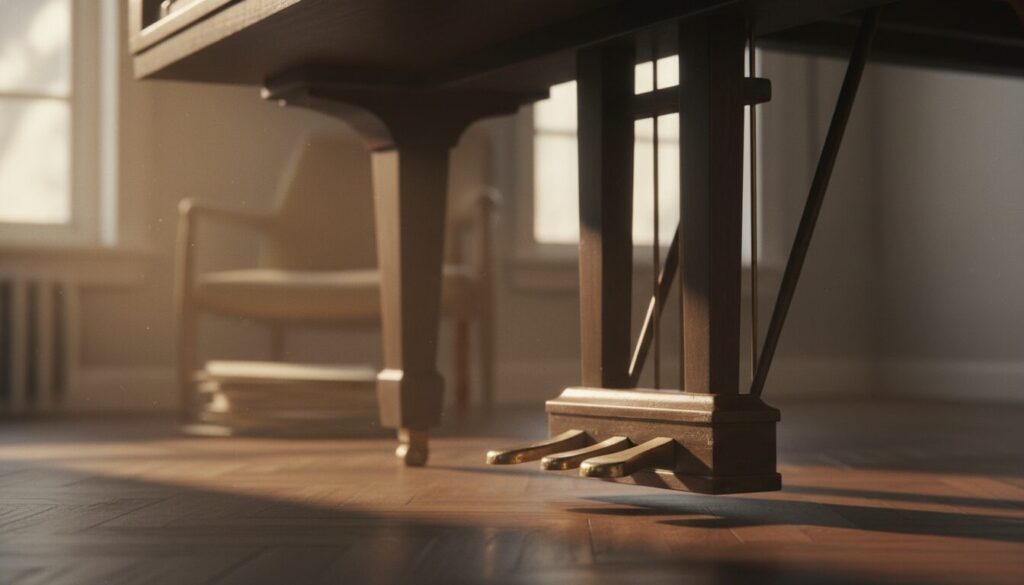
Mastering the art of piano playing involves understanding how to effectively use the pedals. Proper technique can greatly enhance your musical expression. Here’s how to get started with pedal usage.
Proper Foot Placement and Pedal Technique
Begin by sitting at the piano with your feet flat on the floor. Align your big toes with the left and right pedals for optimal control and comfort. Generally, use your right foot for the sustain pedal and your left foot for both the soft and sostenuto pedals.
When using a pedal, raise the front of your foot and move it forward. Place the ball of your foot on the rounded end of the pedal, pivoting down smoothly while keeping your heel on the floor. This technique ensures fluid movement and effective control.
Common Pedaling Techniques: Legato, Half, Preliminary, and Simultaneous Pedaling
There are several techniques to master:
- Delayed or Legato Pedaling: Press the sustain pedal after playing a note, release it, and press again after the next note. This creates seamless connections without muddiness.
- Half Pedaling: Partially press the sustain pedal so dampers lightly touch the strings. This technique is great for achieving a richer tone without blurring notes.
- Preliminary Pedaling: Press the sustain pedal before striking a note. This lifts the damper off the string early, creating a deeper, resonant tone.
- Simultaneous Pedaling: Press and release the pedal at the same time as playing a note or chord. This adds rhythmic emphasis and accent to your music.
When to Start Using Pedals as a Beginner
If you’re just starting, focus on playing confidently with both hands on the keys first. Once you feel comfortable, begin experimenting with the sustain pedal to enhance your sound.
Remember, pedal technique develops over time. Rushing into complex pedaling can lead to frustration and sloppy playing. With practice, proper usage transforms simple notes and chords into expressive, professional-sounding pieces.
For practical, step-by-step guidance on mastering these techniques, visit www.vestapiano.ca, your resource for Canadian piano students.
Understanding Pedal Notation in Sheet Music
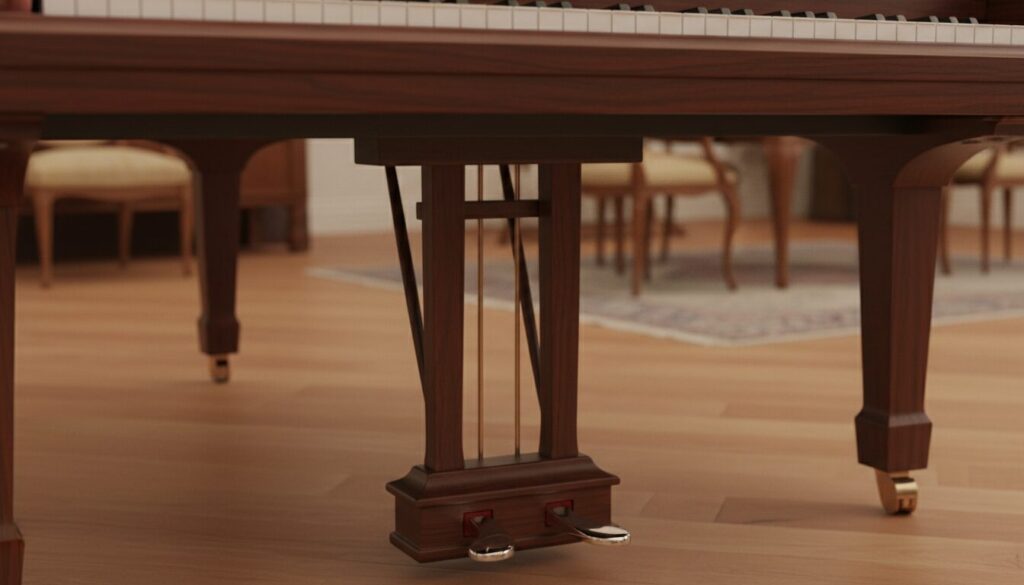
Understanding how to read pedal notation in sheet music is crucial for enhancing your piano playing. The symbols used indicate when to press down on a pedal and when to lift off, guiding your performance.
Symbols and Markings for Sustain, Sostenuto, and Soft Pedals
Each pedal has specific markings in sheet music:
| Pedal Type | Engagement Marking | Release Marking |
|---|---|---|
| Sustain Pedal | Ped. | ✱ |
| Sostenuto Pedal | Sost. Ped. | ✱ |
| Soft Pedal (una corda) | una corda | tre corda |
These markings help you understand when to engage and release each pedal. Some composers provide clear instructions, while others leave it open to interpretation.
Interpreting Written Pedal Instructions and Adding Personal Expression
Not all composers specify pedal markings, allowing for personal interpretation. Famous pieces, like Beethoven’s Moonlight Sonata, demonstrate how pedal use varies between instruments. For instance, Beethoven instructed to keep the sustain pedal pressed throughout the first movement. This worked well on a fortepiano but can create muddiness on modern pianos.
Don’t hesitate to experiment with pedal usage. If you feel a section would benefit from added sustain or tone, trust your ear. Personal expression is key in music, and adapting pedaling can enhance your performance significantly.
Different musical eras approach pedal notation uniquely. Romantic composers often provided detailed markings, while Classical composers left more to the performer’s discretion. Balancing composer intent with your interpretation is essential for expressive playing.
For more resources on sheet music and pedal notation, visit www.vestapiano.ca. This site offers valuable guides for Canadian musicians looking to master pedal techniques.
Common Mistakes and Tips for Effective Pedaling
Effective pedaling is a skill that requires awareness of common mistakes and how to correct them. Mastering this aspect of piano playing can elevate your performance and enhance your musical expression.
Overusing the Sustain Pedal and How to Avoid Muddy Sound
The most frequent error pianists make is overusing the sustain pedal. This can lead to a muddy, blurred sound. Claude Debussy famously said,
“…abusing the pedal is only a means of covering up a lack of technique, making a lot of noise to drown the music you’re slaughtering!”
A good rule of thumb is to lift the pedal fully and clear the sound before pressing down again. This is especially important when melodies consist of neighboring notes or when chords change. Always trust your ears; compare your playing to a recording of a professional pianist. The sustain pedal should enhance your playing, not mask technical deficiencies.
Balancing Pedal Use with Musical Phrasing and Technique
To balance pedal use with musical phrasing, think of the pedal as a tool to support the natural shape of your melody. Avoid blurring every note together indiscriminately. Practicing without the pedal first is crucial. Master clean finger legato and clear articulation before adding the pedal as an expressive enhancement.
Different pianos and room acoustics require different approaches. What sounds clear on a grand piano may sound muddy on an upright piano. Additionally, learn how to use the practice pedal effectively for quiet practice sessions without sacrificing proper finger technique.
Effective pedaling separates amateur players from professionals. Developing clean pedal habits early in your years of study pays off enormously. For expert guidance on troubleshooting your pedaling technique, visit www.vestapiano.ca, where Canadian piano students can find practical solutions to common pedal problems and refine their sound.
Conclusion
Understanding the impact of pedals can elevate your piano performance significantly. Mastering these essential tools transforms your playing from mere note execution into expressive music. The sustain pedal, often called the “soul of the piano,” enriches sound and connects notes beautifully.
As you explore the soft and sostenuto pedals, you will discover how they add texture and advanced expression to your pieces. Pedal technique is a journey, one that requires patience and practice. Your ears will guide you toward achieving clean, beautiful sound.
Commit to refining your skills and experimenting with all three pedals. Visit www.vestapiano.ca for ongoing support, expert tutorials, and a community dedicated to helping you master the art of piano pedaling.
FAQ
What is the function of the sustain pedal?
The sustain pedal, located on the right, allows notes to resonate longer by lifting the dampers off the strings. This creates a rich, sustained sound that enhances musical expression.
How does the sostenuto pedal differ from the sustain pedal?
The sostenuto pedal, positioned in the middle, selectively sustains only the notes that are pressed when the pedal is engaged. This allows for greater control and expression, especially in complex pieces.
What is the purpose of the soft pedal?
The soft pedal, found on the left, modifies the volume and tone of the sound. It shifts the hammers to strike fewer strings, resulting in a softer, more delicate sound ideal for quieter passages.
How can I improve my pedaling technique?
Focus on proper foot placement and practice common techniques like legato and half-pedaling. Gradually incorporate pedal use into your playing to develop a natural feel.
What should I look for in sheet music regarding pedal use?
Look for specific symbols indicating when to use the sustain, sostenuto, or soft pedal. These markings guide your pedaling choices and enhance your interpretation of the piece.
What are common mistakes when using pedals?
Overusing the sustain pedal can lead to a muddy sound. It’s important to balance pedal use with musical phrasing to maintain clarity and precision in your playing.