
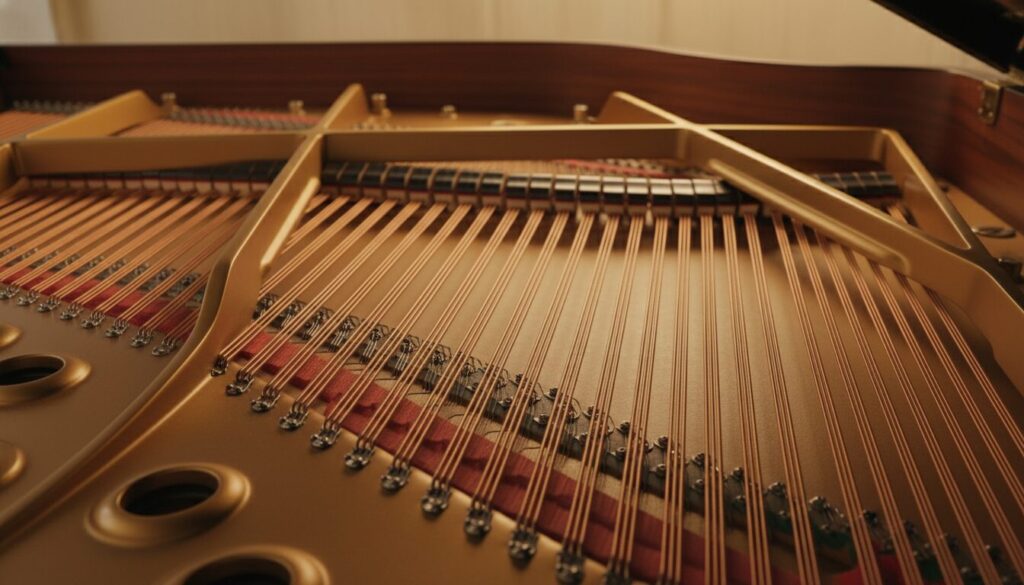
Have you ever wondered how a piano creates its beautiful melodies? The secret lies within its strings. Understanding these strings is essential for anyone looking to appreciate this magnificent instrument fully.
A piano is unique; it combines the features of both a keyboard and a string instrument. When you press a key, it triggers a series of actions that ultimately make a string vibrate, producing a musical note. This intricate mechanism involves 88 keys linked to a complex system of strings stretched across a robust cast iron frame.
Most modern pianos contain between 220 and 240 strings, with 230 being the average. This number is significantly higher than the number of keys because many notes utilize multiple strings. Grasping how these strings function is crucial for beginners, as it explains the varied tonal qualities across the keyboard.
In this guide, we will explore the role of strings in sound production, their varying numbers, and the physical properties that contribute to the piano’s rich sound. Whether you are a student, teacher, or simply curious, understanding piano strings will deepen your appreciation for this remarkable instrument.
What Are Strings in a Piano and Their Role in Sound Production?
The magic of a piano lies in its strings, which play a crucial role in producing sound. These strings are the primary sound-producing elements of the instrument. They convert the mechanical energy of a key press into audible musical notes through vibration.
When a player presses a key on the keyboard, a felt-covered hammer strikes the corresponding string or strings. This action causes them to vibrate at a specific frequency, determining the pitch of the note produced. Each key is connected to its own set of strings, and the number of strings per key varies based on the note’s position on the keyboard. This directly impacts the tone and sound quality.
As the strings vibrate, they generate sound waves that travel through the air. These waves are amplified by the piano’s soundboard, which acts as a large resonating surface. The interaction between the hammer, string, and soundboard is what gives the piano its unique voice, setting it apart from other string instruments.
The pitch of each note is influenced by three main factors: the length of the string, its mass, and the tension at which it is stretched. The Mersenne-Taylor formula provides the mathematical foundation for understanding how these elements work together to produce a specific pitch. This principle has guided piano design for centuries.
Longer, thicker strings produce lower bass notes, while shorter, thinner strings create higher treble notes. This variation in string characteristics is why the piano’s shape and string layout are not uniform across the instrument.
The quality of tone is also affected by the string’s material composition. Most strings are made of steel wire, while copper-wound strings are used in the bass section to add mass and richness to the sound. Understanding how these strings work is the first step to appreciating the complexity and beauty of piano sound production.
How Many Strings Does a Piano Have and Why Does It Vary?
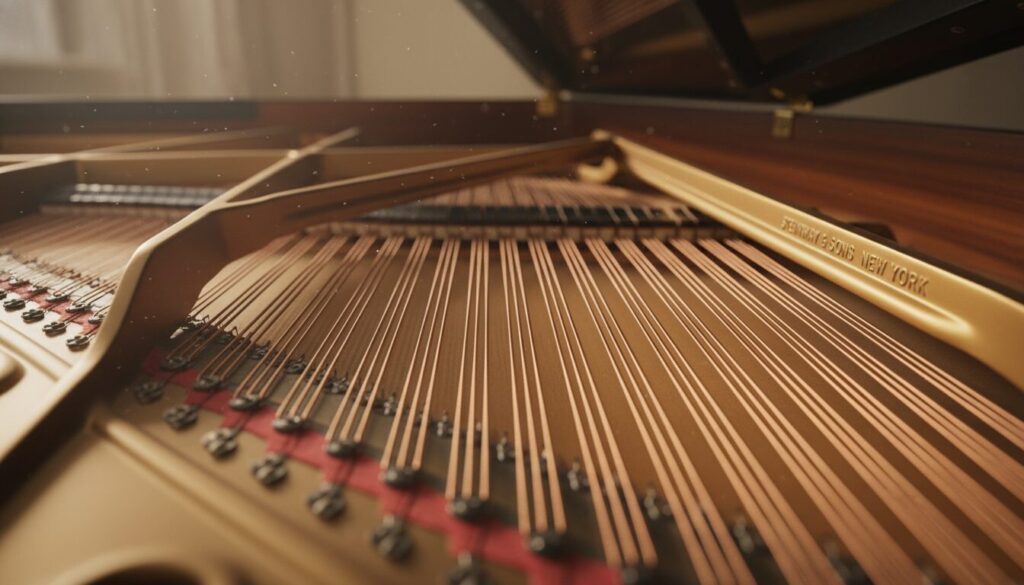
The number of strings in a piano can be surprising, especially when compared to the number of keys. A standard piano has 88 keys, yet it typically contains between 220 and 240 strings, with 230 being the average. This discrepancy is crucial for understanding how the instrument produces sound.
Number of Keys vs Number of Strings
The fundamental difference between keys and strings lies in their function. Each key on the keyboard corresponds to one or more strings, depending on the note’s pitch. For instance, the lowest bass section has one string per note, which suffices for producing a rich tone. This design choice ensures that the instrument maintains volume without needing additional strings.
Strings per Note in Bass, Midrange, and Treble Sections
In the bass break section, approximately 10 keys utilize two strings per note, known as bi-chords. These strings are also copper-wound but slightly thinner, allowing for a smooth transition to the midrange. As we move to the midrange and treble sections, each of the 66 keys has three steel strings per note, totaling 198 strings. This arrangement is essential because shorter, thinner strings require the combined vibration of three to achieve the desired tonal quality.
Unique Cases (e.g., Blüthner's 4-string Notes)
Some pianos feature unique designs that further enhance their sound. For example, Blüthner pianos incorporate a fourth string per note in the highest treble section. This fourth string is not struck by the hammer; instead, it resonates sympathetically, enriching the overall tone. Other exceptional instruments include the Bosendorfer Imperial grand, which has 97 notes, and the Stuart & Sons piano from Australia, featuring 108 keys. These variations highlight the artistic choices manufacturers make regarding string counts and design.
It’s important to note that digital pianos do not contain strings. They replicate the sound of acoustic piano strings through sampled sounds or synthesis. The varying number of strings per note is a deliberate design feature that ensures balanced tone, volume, and pitch across the entire range of the instrument.
The Composition and Physical Properties of Piano Strings
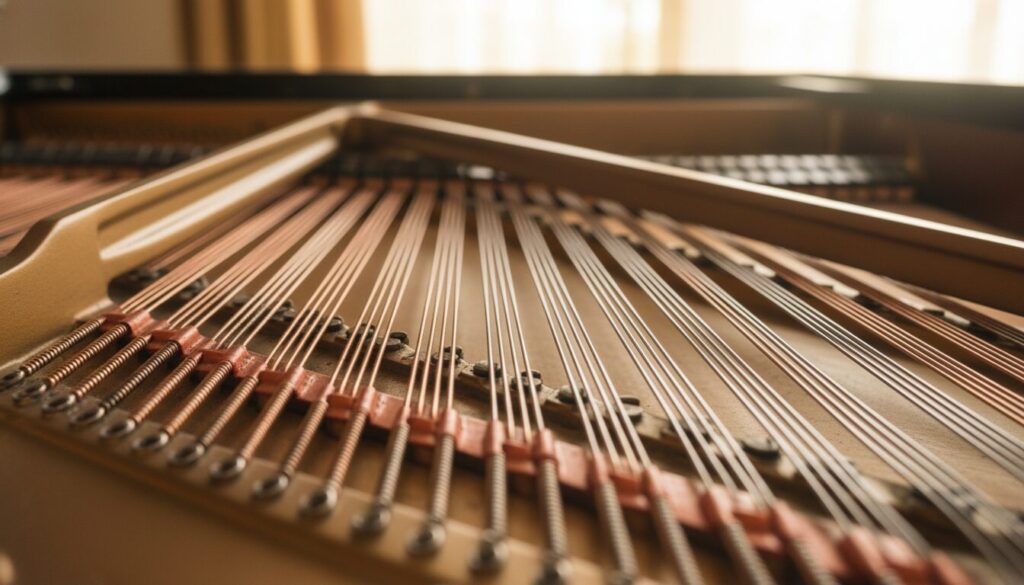
The physical properties of piano strings play a significant role in determining their quality and tone. Understanding these elements can enhance your appreciation of the instrument’s sound. Piano strings are crafted from specific materials that contribute to their performance.
Materials Used: Steel Wire and Copper Winding
Piano strings are primarily made from high-carbon drawn steel. This steel contains over 0.80% carbon, which provides exceptional tensile strength. Each string can handle approximately 150 to 200 pounds of tension. The total tension across all strings in a piano amounts to about 18 tons.
Bass strings differ from standard strings. They feature a steel core wire wrapped in copper. This copper winding adds mass, lowering the pitch without making the strings excessively thick or long. This design choice is crucial for achieving the desired sound quality.
String Gauge, Length, and Tension Explained
There are around 24 sizes of plain wire available for piano strings. However, most pianos utilize about a dozen different gauges. The difference between adjacent gauges is roughly one-third the thickness of a human hair. This precision is vital for tuning and sound consistency.
String length varies across the keyboard. The longest strings are found in the bass section, while shorter strings are used for the treble. This variation directly influences pitch and tonal quality.
Tension is another critical factor. Each string holds significant tension, contributing to the overall sound. The combination of string gauge, length, and tension determines the pitch, with the Mersenne-Taylor formula guiding this relationship.
Impact of String Properties on Tone and Quality
The properties of piano strings greatly affect their tone. For instance, inconsistent wire gauge can lead to notes sounding nasal or thin. A well-designed instrument ensures uniformity across the keyboard, which is essential for a rich sound.
Inharmonicity refers to the deviation of overtones from the fundamental frequency. A balanced amount of inharmonicity gives the piano its characteristic warmth. However, too much can create a clashing sound, detracting from the overall musical experience.
Notable manufacturers like Röslau from Germany produce high-quality plain wire. Many piano makers also create their own bass strings, ensuring optimal tone and quality for their instruments.
In conclusion, the composition and physical properties of piano strings result from centuries of refinement. This combination of metallurgy, physics, and craftsmanship produces the beautiful sound that defines the piano.
| Property | Description |
|---|---|
| Material | High-carbon drawn steel and copper winding |
| Tension | 150-200 pounds per string, totaling 18 tons |
| Gauge | Approximately 24 sizes, with about a dozen used in most pianos |
| Length | Varies from longest in bass to shortest in treble |
| Inharmonicity | Deviation of overtones from fundamental frequency |
Conclusion
Every note played on a piano resonates with the craftsmanship behind its strings. Understanding these components enhances your appreciation for this remarkable instrument. A standard piano features 88 keys but typically contains around 230 strings, ensuring a balanced tone across all notes.
The materials, gauge, length, and tension of each string are meticulously designed to achieve the desired pitch and sound quality. This knowledge empowers beginners and enthusiasts alike to explore pianos with a more informed perspective.
Finally, whether you are just starting your musical journey or are an experienced player, grasping the role of piano strings enriches your connection to this timeless instrument. Visit www.vestapano.ca for more insights into pianos and their intricate design.
FAQ
What is the primary function of piano strings?
The main role of piano strings is to produce sound through vibrations. When a key is pressed, a hammer strikes the strings, causing them to vibrate and create musical notes.
How many strings are typically found in a piano?
A standard piano usually has around 230 strings. The number can vary based on the design, with more strings in higher-pitched sections and fewer in lower ranges.
What materials are used to make piano strings?
Piano strings are primarily made of high-tensile steel wire, often with copper winding on the bass strings. This combination enhances durability and sound quality.
How does the length of a string affect its pitch?
The length of a string is directly related to its pitch. Shorter strings produce higher notes, while longer strings yield lower pitches. This principle is crucial in piano design.
What factors influence the quality of sound produced by piano strings?
Several factors affect sound quality, including string gauge, material composition, tension, and how well the strings are tuned. Each aspect contributes to the overall tone of the instrument.
Can different types of pianos have varying string configurations?
Yes, different types of pianos, such as grand and upright models, may have unique string configurations, affecting their sound and playability. Each design serves specific musical needs.