

Ever thought about that old piano in your living room? It might be more than just a piece of furniture. Many Canadians find themselves wondering about the musical life of their vintage instruments.
Choosing to fix it up is a mix of heart and head. You might be surprised at how a professional tune can bring your family heirloom back to life.
There are many good reasons to tune an old piano. It’s not just about keeping memories alive. It’s also about making sure it stays in good shape. At www.vestapiano.ca, we offer expert advice for Canadian piano owners. Let us help you decide if your piano is worth a second chance.
Key Takeaways
- Check your piano’s condition before starting repairs.
- Emotional value often means more than the cost.
- Get a professional opinion from www.vestapiano.ca for a fair assessment.
- Regular care stops damage to your piano’s inner parts.
- Fixing up a vintage piano can make your home look better.
Assessing the Condition of Your Antique Instrument
Your journey to restoring antique pianos starts with a detailed check. Before you figure out when to tune an antique piano, you must check if it can handle today’s string tension.
Skipping this step can harm the frame or worsen the inside parts. A close look helps you know if your piano can be fully restored or if it’s just for show.
Identifying Structural Integrity and Soundboard Health
The soundboard is the piano’s core, making every note louder. Over time, these wooden parts can crack or lose shape, thanks to Canada’s changing humidity.
“A piano is a complex machine that breathes with the environment; if the foundation is compromised, the music will never truly sing.”
Look for wood splits or signs of the soundboard detaching from the ribs. If the soundboard is damaged, it can’t support the bridge well. This leads to bad sound and tuning issues.
Checking for Pinblock Stability and Tuning Pin Tension
The pinblock keeps the tuning pins tight. If these pins are loose, the piano can’t hold string tension. This makes tuning impossible.
Check if the pins move too much when pressed with a tuning hammer. Professional help is needed if the block is dry or cracked.
If the pinblock is badly damaged, tuning alone won’t fix it. In such cases, restoring antique pianos needs special work. This includes replacing or strengthening the block for long-term playing.
Is it worth to tuning an old piano
Many wonder if tuning an old piano is worth it, given it’s been silent for years. Unlike an acoustic guitar, a piano is a highly complex machine. It has over 200 strings under huge tension, often over 20 tons.
Evaluating the Cost-Benefit Ratio of Professional Services
Thinking about the piano tuning cost is like investing in your piano’s future. You need to compare the cost of professional tuning to the piano’s current value and sentimental worth. At times, the joy of hearing a clear, resonant sound is more valuable than the piano’s price.
If your piano is in good shape, regular tuning is a smart choice. But if it’s badly damaged, you might need a technician to assess repair costs. Deciding if is it worth tuning an old piano depends on how much you plan to play and enjoy it.
Understanding the Impact of Pitch Stability on Playability
The importance of piano tuning goes beyond just playing the right notes. A piano that can’t hold its pitch is hard to play, which is a problem for students or those learning music. Unstable strings make the piano sound poor and hard to enjoy.
Regular tuning keeps the soundboard tension balanced, which protects the piano’s structure. By tuning your piano, you’re not just fixing it; you’re preserving a functional work of art. A well-tuned piano makes playing it a rewarding experience.
Step-by-Step Guide to Preparing Your Piano for Service
Before your next piano tuning service, you can do some prep work at home. This makes it easier for the technician to focus on your piano. Just follow these easy piano maintenance tips for a hassle-free visit.
Clearing the Area for Your Piano Technician
Clear the area around your piano before the technician comes. Move heavy furniture, decorations, and rugs. This lets the technician work more easily and accurately.
Documenting Known Issues and Desired Outcomes
Play your piano and note any problems you’ve noticed. If you hear buzzing or keys sticking, write it down. This helps the technician fix your specific needs right away.
| Preparation Task | Benefit to Service | Impact on Quality |
|---|---|---|
| Clear surrounding area | Better access to action | High |
| List specific issues | Targeted repairs | High |
| Ensure good lighting | Improved visibility | Medium |
Scheduling a Professional Assessment with Vesta Piano
Book a professional assessment with Vesta Piano for a tailored maintenance plan. Visit www.vestapiano.ca to schedule your appointment today. This is the best way to keep your piano in top shape and enjoy a quality piano tuning service for years.
The Benefits of Tuning an Old Piano
Caring for your vintage piano brings many rewards. It’s not just about how it looks. The real magic happens inside. Knowing the benefits of tuning an old piano shows why it’s a key part of being a musician.

Improving Sound Quality and Harmonic Resonance
Regular service makes your piano sound better. A pro tunes the strings to bring back its original sound. This makes every note clear and full.
When you tune your piano, you notice big changes. It plays more smoothly, letting you express yourself better. This turns a dull sound into a source of genuine musical inspiration.
Extending the Life of Your Instrument Through Regular Maintenance
Regular maintenance keeps your piano in top shape. Changes in temperature and humidity can harm it. Tuning stops small problems from becoming big ones.
Understanding the benefits of tuning old piano parts is key. It keeps the soundboard and pinblock safe. This way, your piano will last for years, even for future players in your home.
Common Challenges When Servicing Vintage Pianos
Vintage pianos have a unique charm and history that modern ones can’t match. But, restoring an old piano to its former beauty is a complex task. Knowing the challenges helps you manage your expectations and keep your piano a joy to play.
Dealing with Humidity Fluctuations in the Canadian Climate
In Canada, your piano faces big changes in temperature and humidity. Pianos, made mostly of wood, are very sensitive to these changes. When it’s too dry in winter or too humid in summer, the wood expands and contracts.
This movement affects the strings’ tension, causing frequent pitch instability. To protect your piano, follow these steps:
- Monitor indoor humidity levels all year.
- Use a good room humidifier in winter.
- Keep your piano away from heat sources like radiators or vents.
- Ask a technician about installing a climate control system inside the piano.
Addressing Mechanical Wear and Tear in Older Actions
The inside mechanics of a vintage piano wear out over time. The felt, leather, and wood in the action can get compressed or brittle. This makes the touch feel slow or uneven.
Technicians often need specialized parts or custom adjustments for older actions. Sometimes, parts are no longer made, so finding the right vintage parts is key. A skilled technician can make these delicate repairs, keeping your piano’s authentic feel.
How Often to Tune an Old Piano for Optimal Performance
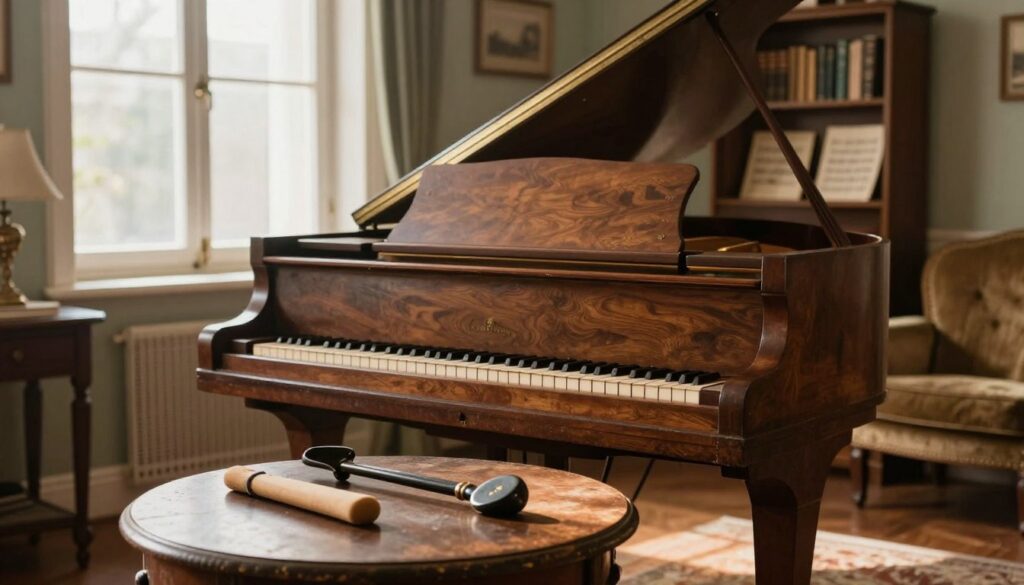
Wondering how often to tune an old piano? It’s key to keep it sounding great. A good rule is to get a professional tuning once a year. This keeps the piano’s internal tension just right.
Establishing a Consistent Maintenance Schedule
Starting with a consistent maintenance plan is key. Your environment affects your piano’s pitch. In Canada, where humidity changes a lot, keeping a stable climate is important.
Deciding when to tune your piano depends on how much you play. Daily players need more frequent tune-ups than those who play less often. A pro can guide you based on your playing habits and home conditions.
Recognizing Signs That Your Piano Needs Immediate Attention
At times, your piano will signal it needs tuning before your next appointment. Look out for sour or “wobbly” notes. These signs mean the strings are out of tune.
Also, check the keys’ feel. If they’re sluggish or unresponsive, it’s time to call a pro. Early intervention prevents damage and keeps your piano in top shape.
Professional Piano Tuning Services and Expert Care
Your piano is a complex machine that needs a skilled professional’s touch. Trying quick fixes at home can harm it. A professional piano tuner gives your piano the precise care it needs.
Choosing professional piano tuning services protects your investment. It keeps your piano safe from damage caused by improper handling.
Why You Should Hire a Certified Piano Technician
Certified technicians have the special skills to tune your piano right. They know how to adjust the strings and soundboard. They also know how to keep your piano stable in Canada’s climate.
Working with a qualified expert means your piano is in good hands. You’ll have peace of mind knowing it’s being taken care of.
There are many benefits to hiring a professional:
- Precision: Experts catch small pitch shifts that others might miss.
- Safety: They use the right tools to avoid damaging your piano.
- Longevity: Regular care from a professional piano tuner helps your piano last longer.
Leveraging Resources at www.vestapiano.ca for Expert Advice
Looking for professional piano tuning? Finding the right help is easy. Visit www.vestapiano.ca for lots of info on keeping your vintage piano in top shape.
This platform is a great place to find the best piano tuning services in your area. Whether you need a piano technician near me or just advice, the site has you covered. Finding a reliable piano tuner near me is now easier than ever. Use these resources to make sure your piano tuning services are in good hands.
Conclusion
Restoring an antique piano turns a silent piece into a source of joy. You can connect the past with today’s music. This makes your piano come alive.
Every note you play celebrates the history in your piano’s wood and wire. Taking care of it keeps it a special part of your life. It’s perfect for family moments and solo practice.
Start your piano restoration with Vesta Piano’s help. Their experts know how to keep your piano in top shape. They understand the Canadian climate’s impact.
By keeping up with maintenance, you ensure your piano’s music lives on. Take action now to preserve its beauty and sound for years to come.
Professional Piano Tuning Services and Expert Care
Identifying Structural Integrity and Soundboard Health
Before tuning, check your piano’s structure. Look for cracks in the soundboard, the big wooden panel that makes sound. If it’s damaged, your piano might need more than just tuning.
Checking for Pinblock Stability and Tuning Pin Tension
Checking the pinblock is key. If the tuning pins are loose, your piano won’t stay in tune. A pro can fix this, making sure your investment is worth it.
Evaluating the Cost-Benefit Ratio of Professional Services
Deciding to tune an old piano involves weighing costs against its value. Tuning might seem expensive, but it’s worth it for your piano’s longevity. A pro ensures your piano stays in good shape.
Understanding the Impact of Pitch Stability on Playability
Tuning affects more than just sound quality. It’s vital for learning to play. A well-tuned piano helps you develop a musical ear. Tuning ensures your piano remains a joy to play.
Clearing the Area for Your Piano Technician
Prepare your home before the piano tuner arrives. Clear the area around your piano. This lets the technician work easily, making the service more efficient.
Documenting Known Issues and Desired Outcomes
Document any problems with your piano. Note sticking keys or buzzing sounds. This helps the technician focus on what matters most to you.
Scheduling a Professional Assessment with Vesta Piano
Ready to book a service? Visit www.vestapiano.ca to schedule a professional assessment. Whether you need a tune-up or a deep check, Vesta Piano can help.
Improving Sound Quality and Harmonic Resonance
Tuning an old piano greatly improves its sound. It allows the piano to resonate fully. A well-tuned piano sounds clear and inspiring, making practice more rewarding.
Extending the Life of Your Instrument Through Regular Maintenance
Regular tuning extends your piano’s life. It prevents damage and keeps it playable for years. Proper care makes your piano a long-term investment in music.
Dealing with Humidity Fluctuations in the Canadian Climate
Canadian climate changes can harm your piano. Humidity affects the wood, causing pitch issues. Using humidity control systems helps protect your piano.
Addressing Mechanical Wear and Tear in Older Actions
Old pianos face mechanical issues that tuning can’t fix. Parts wear out, and adjustments may be needed. A pro can help restore your piano’s original condition.
Establishing a Consistent Maintenance Schedule
Tune your piano at least twice a year. For older pianos, more frequent tuning is needed. A regular schedule prevents costly repairs and keeps your piano in top shape.
Recognizing Signs That Your Piano Needs Immediate Attention
Learn to spot when your piano needs tuning. Sluggish keys or off-pitch notes mean it’s time for a service. Catching these signs ensures your piano plays well.
Why You Should Hire a Certified Piano Technician
Always hire a certified piano tuner. DIY repairs can damage your piano. A pro has the skills and tools to tune safely, preserving your instrument.
Leveraging Resources at www.vestapiano.ca for Expert Advice
For top piano tuning services, check www.vestapiano.ca. They offer expert advice and guidance. Vesta Piano ensures your piano stays a source of musical joy.