

Discovering an old musical instrument in your home often sparks curiosity about its history and potential. Many owners wonder if piano tuning after 25 years is a realistic goal for their neglected heirloom. The good news is that many instruments remain viable for professional service, even when they have sat silent for decades.
You might be surprised to learn that some units do not require an extensive pitch raise to function beautifully again. Restoring your instrument is often a rewarding investment that brings music back into your living space. If you are ready to explore the possibilities, our team at Vesta Piano is here to help.
We provide expert assessments to determine the health of your equipment. Please reach out to us at 647-832-2177 or visit our website at www.vestapiano.ca to schedule a consultation. Let us help you decide if your cherished piece is ready for a new chapter of melodies.
Key Takeaways
- Many long-neglected instruments remain in good enough condition for professional service.
- A quarter-century of silence does not always mean the internal components are beyond repair.
- Some older models may not require a complex pitch raise to sound great again.
- Professional assessment is the safest way to evaluate the viability of your specific model.
- Vesta Piano offers expert guidance to help you restore your family heirloom.
Understanding the Impact of Long-Term Neglect on Pianos
The silence of a piano left unplayed for years often masks the complex degradation occurring inside its wooden frame. Many owners find themselves asking about the feasibility of piano tuning after a long time, unaware that the instrument has likely shifted significantly in its structural balance.
“A piano is a living, breathing machine that reacts to every change in its environment, and silence is rarely golden for its internal health.”
How Time Affects Internal Components
Over two decades, the internal parts of a piano undergo constant stress. The felt components, which are essential for producing a clear tone, often become compressed or hardened due to environmental exposure.
This compression changes the way the hammers strike the strings, leading to a muffled or uneven sound. Furthermore, the wooden action parts may warp, which creates mechanical resistance that makes the keys feel sluggish or unresponsive.
The Role of Humidity and Environmental Factors
One of the most common effects of not tuning a piano is the gradual loss of pitch stability caused by fluctuating humidity. Wood is a porous material that expands and contracts as moisture levels change throughout the seasons.
When a piano remains in an uncontrolled environment for years, these cycles of expansion and contraction cause the soundboard to lose its crown. This structural change directly impacts the tension of the strings.
You might wonder, does age affect piano tuning in a way that is irreversible? Consider these primary environmental risks:
- Humidity swings: Rapid changes cause the soundboard to crack or lose its structural integrity.
- Dry air: Prolonged dryness causes the wood to shrink, leading to loose tuning pins.
- Excessive moisture: High humidity leads to rust on strings and corrosion of metal components.
Addressing these environmental impacts is the first step toward reviving your instrument. By stabilizing the climate, you provide the foundation necessary for a technician to begin the restoration process.
Can a piano be tuned after 25 years?
If you are asking, “can a piano be tuned after 25 years?”, you are certainly not alone. Many people inherit or rediscover instruments that have sat silent for a quarter-century, hoping to hear them play beautifully once again. The short answer is yes, it is technically possible to bring most pianos back to standard A440 concert pitch.
However, the process is rarely as simple as a standard service call. When an instrument has been dormant for so long, the internal components have settled into a state of deep tension or slack. Reviving this voice requires patience and professional expertise.
The Reality of Pitch Stability
Achieving long-term piano tuning stability is the primary hurdle for any instrument that has been neglected for decades. Because the strings have lost their tension, they will not hold a new pitch immediately after the first pass. The wooden structure of the piano, particularly the pinblock, must adjust to the renewed pressure of the strings.
“A piano that has been neglected for years is like an athlete returning to training; it cannot be expected to perform at peak capacity on the very first day.”
You should expect the piano to drift out of tune quickly after the initial session. It often takes multiple tuning visits over several months to convince the instrument to hold a stable pitch again.
Why Standard Tuning Might Not Be Enough
A standard tuning is designed for an instrument that is already close to the correct pitch. When a piano has been ignored for 25 years, it is often significantly flat, sometimes by a full semitone or more. This requires a pitch raise, which is a preliminary, aggressive tuning pass to bring the strings up to the correct tension before the fine-tuning can even begin.
Without this extra step, the tension across the soundboard would be uneven, potentially causing further damage. Professional technicians prioritize the structural health of the instrument over immediate perfection. By investing in this intensive process, you ensure that your piano remains a playable, reliable piece of history for years to come.
Assessing the Structural Integrity of Your Instrument
Taking a close look at your instrument’s internal components can save you from costly surprises during the tuning process. Before you invite a technician to your home, you can perform a basic visual inspection to gauge the piano’s overall health. Understanding these parts helps you communicate more effectively with professionals about the condition of your instrument.
Checking the Soundboard for Cracks
The soundboard acts as the heart of your piano, amplifying the vibrations of the strings. Over time, fluctuations in humidity can cause the wood to expand and contract, leading to potential cracks.
While minor hairline cracks are common in older instruments, large separations can significantly impact sound quality. A healthy soundboard is essential for maintaining proper resonance and tone. If you notice significant gaps, it is wise to consult a professional before attempting any major adjustments.
Evaluating the Pinblock and Tuning Pins
The pinblock holds the tuning pins in place, which in turn maintain the tension of the strings. If the wood in the pinblock has dried out or cracked, the pins may lose their grip, making it impossible for the piano to hold a stable pitch.
You can perform a simple check by observing the pins for signs of rust or loose movement. Adequate torque is required to keep the instrument in tune. If the pins feel loose or appear to be leaning, the piano may require a specialized repair rather than a standard tuning.
Inspecting the Action and Felt Components
The action is the complex mechanism that translates your touch on the keys into the striking of the strings. Because pianos contain many moving parts, long-term neglect often leads to stiff or unresponsive keys.
It is important to keep the following checklist in mind when inspecting your piano:
- Check for moth damage or heavy wear on the felt hammers.
- Look for signs of rust on the strings, which increases the risk of snapping during tension changes.
- Test each key to ensure it returns to its original position without sticking.
- Inspect the internal wooden parts for signs of warping or structural fatigue.
Identifying these issues early prevents further damage during the tuning process. Being proactive allows you to make informed decisions about the future of your piano.
The Difference Between Tuning and Restoration
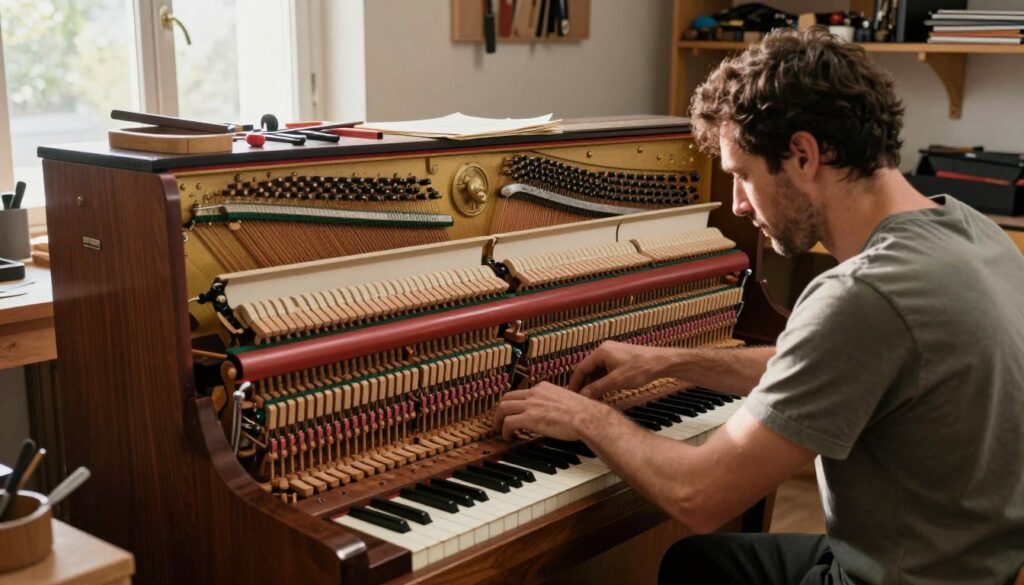
Many owners wonder if their instrument needs a quick fix or a complete overhaul after decades of silence. Distinguishing between basic maintenance and comprehensive piano restoration is vital for your instrument’s future. While some pianos simply need a fresh start, others require deep mechanical intervention to function correctly.
When Tuning Is Sufficient
If your piano has been kept in a stable, climate-controlled environment, it might only require a standard tuning. A professional technician can often perform a pitch raise to bring the strings back to the correct tension. This process is usually enough if the internal action remains responsive and the soundboard is free of major structural damage.
You should consider this route if the keys feel consistent and the hammers strike the strings with precision. Regular maintenance is often the only thing standing between a playable instrument and one that sounds dull. If the basic mechanics are still intact, a simple service can restore the joy of playing without a significant investment.
When Mechanical Repairs Are Necessary
Sometimes, the passage of time takes a toll that a simple tuning cannot fix. If you notice keys that stick, hammers that do not return, or a sluggish touch, you are likely looking at the need for piano restoration. Parts inside the piano often require regulation to work properly after 20 years of non-use.
Mechanical repairs involve replacing worn felt, adjusting the action geometry, and ensuring the dampers function silently. These tasks go beyond mere pitch adjustments to address the physical health of the instrument. Investing in these repairs ensures that your piano is not just in tune, but also mechanically reliable for years to come.
| Service Type | Primary Goal | Typical Scope |
|---|---|---|
| Basic Tuning | Pitch Accuracy | String tension adjustment |
| Mechanical Regulation | Touch and Feel | Action and felt adjustment |
| Full Restoration | Total Renewal | Comprehensive piano restoration |
Common Challenges Faced by Aging Pianos
Bringing a long-dormant instrument back to life requires more than just a simple tuning session. When a piano sits untouched for decades, the internal components undergo significant physical changes. Understanding the effects of not tuning a piano is essential for any owner hoping to restore their instrument to its former glory.
Dealing with Rust and Corrosion
Over time, moisture in the air can wreak havoc on the metal parts inside your piano. Strings, tuning pins, and bridge pins are particularly susceptible to oxidation. Rust can weaken the structural integrity of the strings, making them prone to snapping during the tensioning process.
Corrosion often spreads to the tuning pins, which can cause them to lose their grip on the pinblock. This makes aging piano tuning a complex task that requires a skilled hand to prevent further damage. If the rust is severe, a technician may recommend replacing specific components to ensure the instrument remains stable.
Addressing Sticky Keys and Action Issues
The action of a piano is a delicate mechanism consisting of thousands of moving parts. After years of inactivity, the felt and wood components often swell or compress due to humidity fluctuations. This leads to keys that stick, feel sluggish, or fail to return to their resting position entirely.
“A piano is a living machine that breathes with its environment; when it stops moving, the mechanical harmony begins to fade.”
You might notice that some notes sound muffled or fail to strike the strings correctly. These mechanical hurdles are common in older instruments and usually require a professional to regulate the action. Proper regulation ensures that every key responds with the precision and touch you expect from a quality piano.
The Importance of Pitch Raising
Many people wonder, does age affect piano tuning in a way that prevents a standard service? When a piano has dropped significantly in pitch, a single tuning session is rarely enough to hold the tension. Technicians must perform a “pitch raise” to bring the strings back to concert pitch gradually.
This process involves pulling the strings up to their target tension in stages. It allows the wooden frame and soundboard to adjust to the increased pressure without warping. You should expect follow-up visits to ensure the instrument settles properly and maintains its new, stable pitch.
| Issue | Primary Cause | Recommended Solution |
|---|---|---|
| Rust on Strings | High Humidity | Cleaning or Replacement |
| Sticky Keys | Felt Swelling | Regulation and Lubrication |
| Low Pitch | Long-term Neglect | Multi-stage Pitch Raise |
| Loose Pins | Pinblock Drying | Pin Treatment or Replacement |
The Role of a Professional Piano Technician
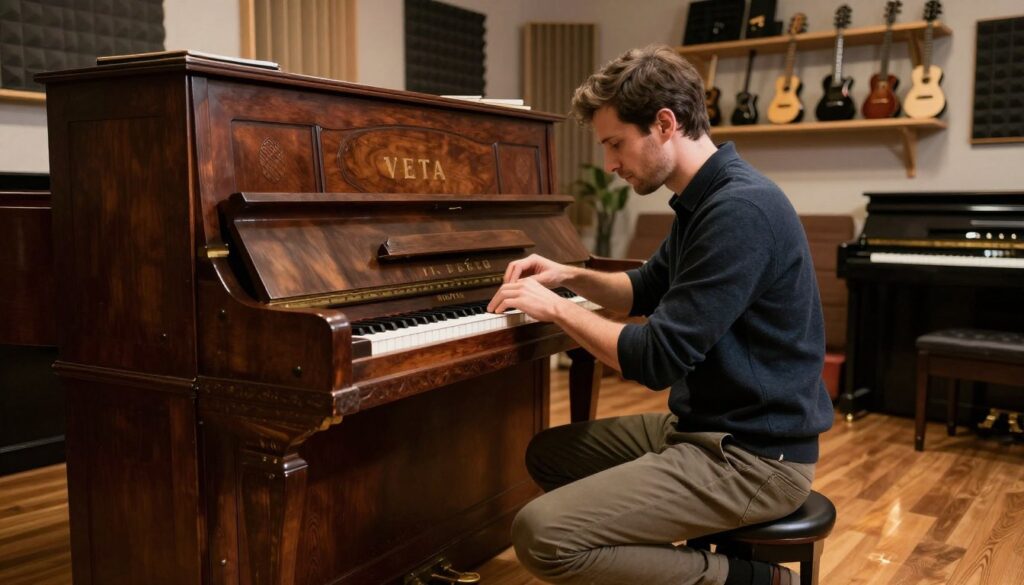
Bringing an instrument back to life requires the steady hand of a professional piano technician. When a piano has remained untouched for decades, it undergoes significant physical changes that only a trained expert can safely navigate. Relying on specialized knowledge ensures that your instrument receives the care it needs to function properly again.
Why DIY Tuning Is Not Recommended
Many owners feel tempted to handle long-term piano tuning on their own to save time or money. However, attempting to adjust the tension of strings that have been dormant for years is incredibly risky. You could easily snap a string or damage the delicate tuning pins beyond repair.
Professional piano tuning recommendations consistently warn against DIY efforts for several reasons:
- Structural Risk: Old wood and metal components may be brittle and prone to cracking under sudden pressure.
- Safety Hazards: High-tension strings can cause injury if they break during an amateur adjustment.
- Irreversible Damage: Incorrect techniques often lead to permanent issues that are far more expensive to fix than a standard service call.
What to Expect During an Initial Inspection
When you hire a qualified piano technician, the first step is always a comprehensive evaluation. They do not simply start turning pins; instead, they perform a thorough inspection by both looking and listening to the piano. This diagnostic phase is vital for aging piano tuning success.
During this visit, the expert will typically:
- Examine the soundboard for structural integrity and potential cracks.
- Test the action and felt components to see if they respond correctly to touch.
- Assess the condition of the tuning pins to ensure they can hold the required tension.
- Provide a clear roadmap of necessary repairs before any tuning takes place.
By prioritizing a professional assessment, you protect your investment and ensure the instrument is handled with the precision it deserves. This careful approach is the only way to determine if your piano can safely return to a playable state.
Piano Maintenance After 25 Years of Storage
Maintaining a piano after 25 years of storage is essential to protect your investment and keep it sounding beautiful. Proper piano maintenance after 25 years is not just about fixing what was broken; it is about creating a stable future for the instrument. By focusing on consistent care, you can avoid the costly repairs often associated with a piano maintenance after long period of neglect.
Preparing the Environment for a Revived Piano
The environment where you place your piano plays a critical role in its health. You should avoid placing the instrument near windows, air vents, or radiators that cause rapid temperature swings. Consistent humidity levels are vital to prevent the soundboard from cracking and the wooden action parts from warping.
Using a high-quality room humidifier or a dedicated piano humidity control system can make a significant difference. These tools help stabilize the internal components, ensuring that your piano tuning after 25 years remains stable for as long as possible. A stable environment is the foundation of long-term preservation.
Establishing a Regular Maintenance Schedule
Many owners wonder, how often should a piano be tuned? After a long period of storage, your piano will likely need more frequent attention as the strings and wood settle into their new tension. We recommend a piano tuning frequency of at least twice a year to account for seasonal changes in the United States.
Sticking to these regular piano tuning intervals allows a technician to catch minor issues before they become major problems. If you are still asking yourself, how often should piano be tuned? the answer is simple: consistency is key. Regular professional check-ups ensure that your instrument retains its value and provides a delightful playing experience for years to come.
Benefits of Restoring an Older Instrument
Choosing to restore a vintage piano is more than a simple repair; it is an act of preserving a musical legacy. Many owners find that the character of an older instrument is impossible to replicate with modern manufacturing. By focusing on piano restoration, you can breathe new life into a piece of art that has likely been in your family for generations.
Preserving Family Heirlooms and History
Many vintage pianos, such as those crafted by Heintzman, are often viewed as a force of nature. These instruments were built to withstand decades of use and can often endure long periods without maintenance while still retaining their structural core. Restoring these heirlooms allows you to keep a tangible piece of your family history alive.
Understanding the reasons for piano tuning is essential when dealing with these legacy pieces. A professional restoration honors the original craftsmanship while ensuring the instrument remains functional for future generations. It is a rewarding way to connect the past with the present through music.
The Unique Sound Quality of Aged Wood
One of the primary advantages of older instruments is the rich, resonant tone produced by aged wood. Over time, the wood in a soundboard settles and dries, which often results in a depth of sound that new pianos simply cannot match. Maintaining piano’s sound quality through careful restoration allows this unique acoustic signature to shine once again.
The importance of tuning a piano cannot be overstated when you want to unlock this hidden potential. When an older piano is properly regulated and tuned, the clarity and warmth of the notes become truly remarkable. This process ensures that the instrument performs at its peak, providing a playing experience that feels both nostalgic and professional.
| Feature | Restored Vintage Piano | New Entry-Level Piano |
|---|---|---|
| Sound Character | Rich, Mellow, Aged | Bright, Consistent |
| Historical Value | High (Heirloom) | None |
| Wood Quality | Seasoned, Stable | Freshly Processed |
| Investment | Preserves Legacy | Depreciating Asset |
Professional Piano Tuning Services at Vesta Piano
Bringing a long-neglected piano back to life requires the steady hand of a professional. At Vesta Piano, we understand that every instrument carries a unique history and potential for renewed beauty. Our team is dedicated to providing the expert care your piano needs to sing once again.
Expert Care for Your Instrument
When you choose our piano tuning services, you are opting for a meticulous evaluation process. Every instrument undergoes a comprehensive inspection to determine its structural and mechanical health. Our skilled piano technician team identifies specific needs, from minor adjustments to complex restorations, ensuring that no detail is overlooked.
We believe that age should never be a barrier to musical expression. Whether your piano has been silent for decades or simply requires routine maintenance, our experts approach every project with precision and passion. We strive to bring out the best sound quality possible, regardless of the instrument’s past.
How to Contact Vesta Piano for an Assessment
Taking the first step toward reviving your piano is simple and straightforward. We invite you to reach out to our team to schedule a professional evaluation of your instrument. You can speak directly with a qualified piano technician by calling us at 647-832-2177.
For more information about our piano tuning services and to view our full range of restoration options, please visit our website at www.vestapiano.ca. We look forward to helping you restore your family heirloom to its former glory. Let us help you make your piano a centerpiece of your home once more.
Essential Piano Care Tips for Long-Term Longevity
Long-term ownership of a piano involves a commitment to consistent care and environmental awareness. While your piano tuning frequency depends on usage, the stability of your instrument relies heavily on how you treat it every day. By taking proactive steps, you ensure that your investment remains a beautiful centerpiece for years to come.
Managing Indoor Climate Control
Pianos are primarily made of wood and felt, materials that react significantly to changes in moisture. To keep the soundboard stable, you must maintain a consistent indoor environment. Using a high-quality humidifier or dehumidifier helps prevent the wood from swelling or shrinking, which is vital for maintaining piano’s sound quality.
Many owners wonder about the best time to tune a piano, but the answer is often tied to seasonal shifts. If you keep your home’s humidity levels steady between 40% and 45%, your piano will hold its pitch much longer. This stability reduces the stress on the pinblock and keeps the internal components functioning smoothly.
“A piano is a living, breathing instrument that demands a stable environment to truly sing. When you control the climate, you control the longevity of the music.”
Regular Cleaning and Dusting Practices
Effective piano maintenance goes beyond internal adjustments; it also includes keeping the exterior and interior free of debris. Dust can settle on the soundboard and inside the action, potentially causing friction or mechanical issues over time. A simple, consistent cleaning routine is one of the most effective piano care tips you can follow.
Use a soft, lint-free cloth to wipe down the keys and the cabinet regularly. Avoid using harsh chemical sprays, as these can damage the finish or seep into the delicate action parts. Keeping the lid closed when the instrument is not in use also serves as a great barrier against dust and accidental spills.
| Task | Frequency | Benefit |
|---|---|---|
| Dusting Cabinet | Weekly | Protects Finish |
| Climate Check | Daily | Prevents Warping |
| Professional Tuning | Bi-Annually | Ensures Pitch |
| Action Inspection | Annually | Prevents Wear |
Conclusion
A twenty-five-year gap in maintenance creates a unique challenge for any instrument. You possess the power to transform a silent heirloom into a vibrant source of music once again. Proper care bridges the distance between neglect and a beautiful, resonant future.
Expert guidance makes this restoration process manageable and rewarding. You do not have to navigate the complexities of internal mechanics alone. Professional technicians provide the clarity needed to make informed decisions about your piano.
Reach out to Vesta Piano at 647-832-2177 to schedule a comprehensive assessment. You can also visit www.vestapiano.ca to explore our full range of services. We remain dedicated to helping you preserve your musical legacy for many years to come.
FAQ
Can a piano be tuned after 25 years of neglect?
Yes, in most cases, a piano can be tuned after 25 years. However, it will likely require a “pitch raise” to return it to concert pitch and may need multiple sessions to achieve stability.
What is the best time to tune a piano that hasn’t been serviced in decades?
The best time to tune a piano is during a period of stable humidity, typically in the spring or fall. However, if it hasn’t been tuned in 25 years, the best time is as soon as possible to prevent further structural degradation.
How often should a piano be tuned once it has been revived?
Following a long hiatus, we recommend a tuning frequency of every 3 to 4 months for the first year. After the instrument stabilizes, you can return to the standard piano tuning recommendations of twice a year.
Does age affect piano tuning and the ability to hold a pitch?
Age itself isn’t the primary factor, but the condition of the pinblock is. If the wood remains healthy, an old piano can hold a tune as well as a new one. If the pinblock is cracked, the piano may require restoration.
What are the effects of not tuning a piano for a long period?
Long-term neglect causes the pitch to drop significantly, strings to corrode, and mechanical parts to seize. It also puts uneven stress on the soundboard, which can lead to permanent loss of tone quality.
Is piano restoration the same as a simple tuning?
No. Piano tuning only adjusts the tension of the strings. Restoration involves repairing or replacing internal mechanical parts, hammers, and strings to return the instrument to its original factory condition.
Why is a piano technician necessary for an aging piano?
An aging piano is fragile. A professional piano technician has the expertise to identify structural “red flags” and can perform a pitch raise without breaking strings or damaging the pinblock.
What are the primary reasons for piano tuning after such a long time?
The primary reasons are to restore the instrument’s musicality, protect its resale value, and prevent the wood and metal components from reaching a point of “unfixable” decay.
Can any piano be saved regardless of its condition?
While most can be saved, some pianos kept in extreme environments (like unheated garages or damp basements) may have “blown” soundboards or rotted pinblocks that make the cost of repair exceed the value of the instrument.