
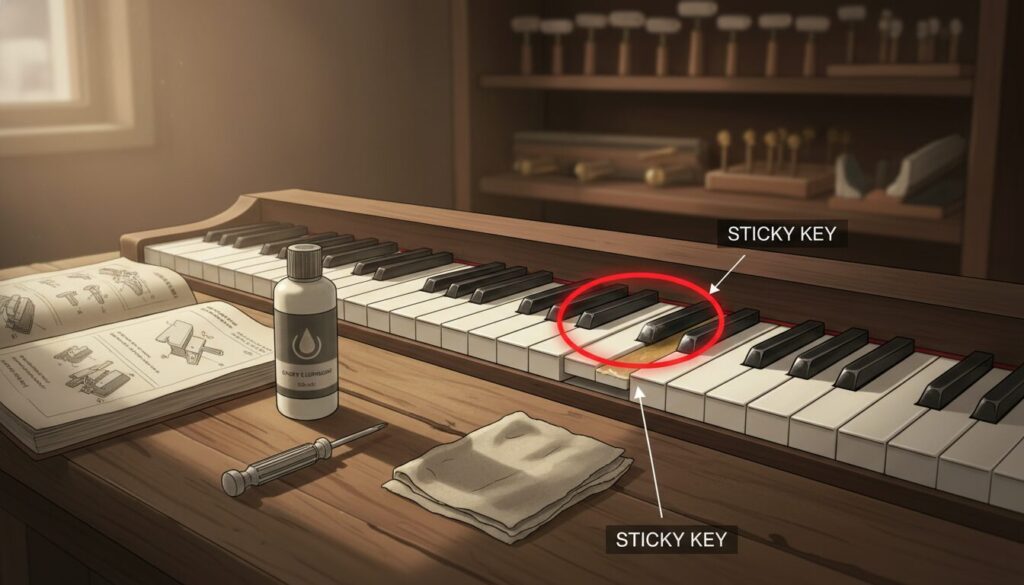
Have you ever found yourself struggling to play your favorite song because of a sticky piano key? This common frustration can disrupt practice sessions for both beginners and seasoned pianists alike. Understanding the root cause of the problem is essential for effective resolution.
This guide will walk you through the reasons behind sticking keys, the typical repair costs, and practical DIY solutions that can resolve the issue in as little as five minutes. While some problems may require the expertise of a professional piano technician, many can be tackled at home with simple tools like a soft cloth and compressed air.
Maintaining a healthy keyboard is crucial for ensuring consistent key movement and touch response. The cost to address a sticky key varies widely, ranging from free DIY cleaning to several hundred dollars for professional repair. Regular maintenance not only saves money but also extends the life of your instrument.
Don’t worry; sticky keys are a common and usually fixable problem. This guide provides actionable steps to restore your piano to optimal playing condition.
Key Takeaways
- Sticky keys can disrupt practice and performance.
- Common causes include dirt, humidity, and mechanical issues.
- DIY solutions can often fix minor problems quickly.
- Professional repairs can be costly but are sometimes necessary.
- Regular maintenance helps prevent future issues.
- Understanding your piano can save time and money.
Understanding Sticky Piano Key Issues and Repair Costs
Many piano players encounter issues with keys that refuse to respond smoothly. This problem can stem from various factors, including environmental influences and mechanical components. Understanding these causes can help you maintain your instrument effectively.
Common Causes of Sticky Piano Keys
Sticky keys can arise from several common issues:
- Humidity and Temperature Fluctuations: Changes in moisture levels can cause wooden action parts to swell, restricting movement.
- Dust and Debris: Accumulation of dirt can block key movement, leading to unresponsive keys.
- Foreign Objects: Items like coins or paper clips can fall between keys, obstructing their return to the resting position.
- Corroded Rail Pins: Rusty pins can create friction, preventing smooth key travel.
- Key Slip Issues: If the key slip is jammed too tightly against the keys, multiple keys may stick simultaneously.
- Moisture Buildup: Spills or high humidity can affect felt bushings and wooden components, leading to sluggish key response.
Typical Cost Ranges for Piano Repairs
Repair costs for pianos can vary significantly based on the issue at hand. Here’s a breakdown of typical costs:
| Repair Type | Cost Range (CAD) |
|---|---|
| Simple Cleaning | $100 – $200 |
| Sticky Keys Repair | $150 – $190 |
| Sluggish Keys or Action Work | $300 – $600 |
| Severe Issues (e.g., broken hammers) | Over $1000 |
Factors Affecting Repair Costs
Several factors can influence the overall cost of piano repairs:
- Age and Condition: Older pianos may require more extensive work.
- Type of Repair: Some repairs are straightforward, while others may involve replacing parts.
- Technician Experience: More experienced technicians may charge higher rates.
- Location: Prices can vary across Canada, with urban areas typically having higher rates.
Regular maintenance and annual tuning can prevent many sticky key issues, ultimately saving piano owners money over time.
How much does it cost to fix a sticky piano key? - Key Cost Considerations
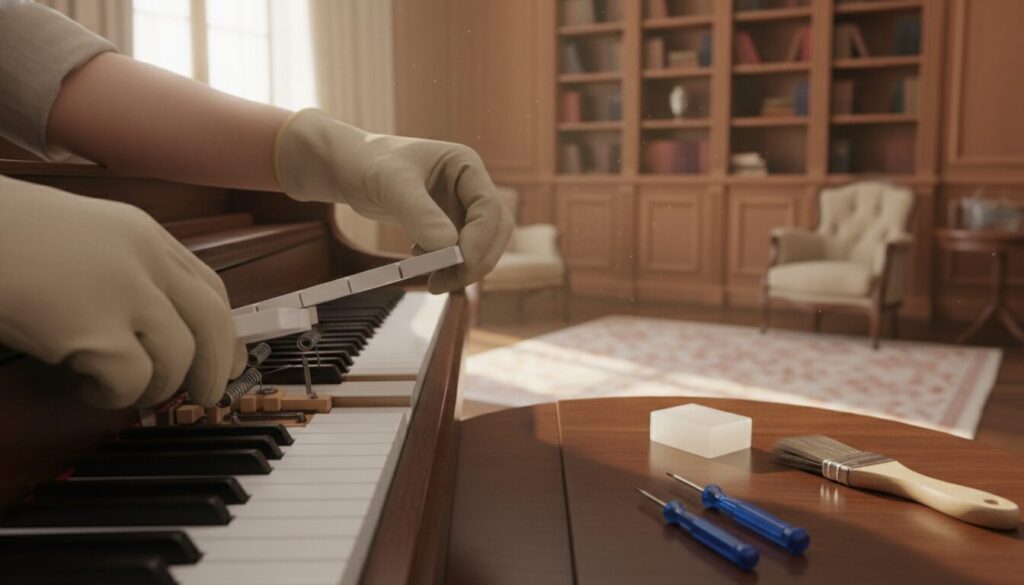
Understanding the financial implications of piano repairs can help you make informed decisions. Repair costs can vary significantly based on the nature of the issue. Minor repairs can be quite affordable, while major repairs can be quite costly.
Minor Repairs vs. Major Repair Expenses
Minor repairs include tasks like cleaning debris from under a key or lubricating a sticky rail pin. These quick fixes can cost between $100 and $300 when performed by a qualified piano technician in Canada. On the other hand, major repairs involve action regulation, hammer replacement, or rebuilding multiple key mechanisms. These can range from $500 to over $3,500.
A simple sticky key caused by a foreign object or moisture is often a quick fix. It typically requires minimal time and no replacement parts. However, keys that don’t work at all due to broken hammers or damaged action components demand more extensive work and higher costs.
How Technician Experience Influences Cost
The experience level of the piano technician directly influences the cost. Master technicians who service concert grand pianos for Canadian symphony orchestras often command premium rates. In contrast, less experienced technicians may offer more affordable pricing for straightforward keyboard repairs.
Piano technicians who work with prestigious institutions like the Toronto Symphony Orchestra or the Vancouver Symphony Orchestra are usually the most skilled but also the most expensive option for repairs.
Additional Costs: Moving, Replacement Parts, and Tuning
When budgeting for repairs, consider additional costs. Piano moving fees can add up if the instrument needs to be transported to a workshop. Replacement parts, such as new hammers, rail pins, or key bushings, can also contribute to the overall expense. Furthermore, the cost of a full tuning after the repair work is completed should not be overlooked.
A new piano typically comes with a warranty that may cover certain sticky key issues. However, older pianos are more likely to require out-of-pocket repair expenses. Investing in quality repair work from a reputable piano technician can prevent recurring issues and extend the playable life of your instrument. This makes it a worthwhile expense compared to the cost of purchasing a new piano.
Some piano technicians in Canada offer package deals that combine tuning, cleaning, and minor key repairs at a discounted rate. This can be a cost-effective solution for addressing multiple keyboard issues at once.
Diagnosing and Fixing Sticky Piano Keys at Home
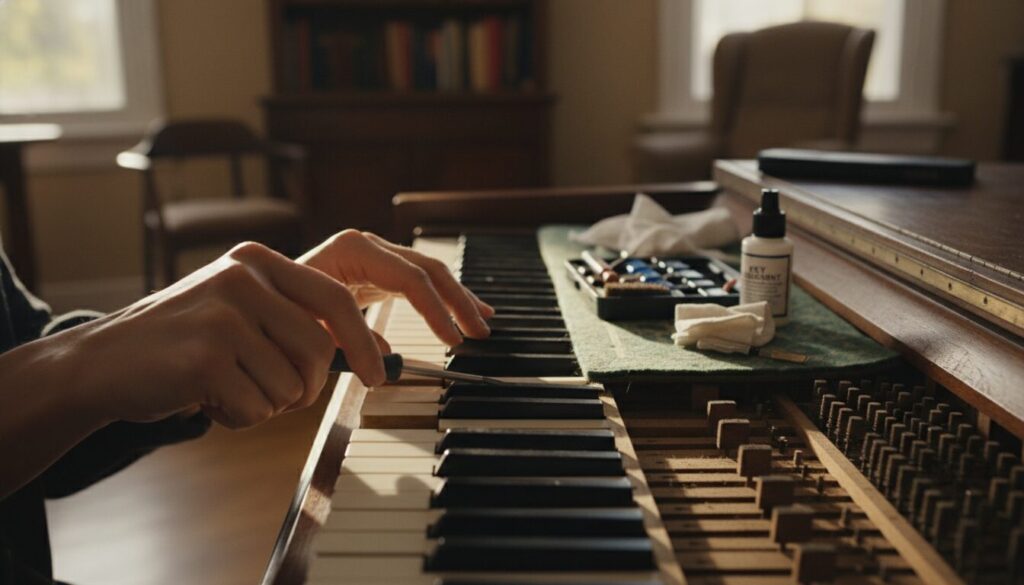
If you’re experiencing unresponsive keys on your piano, it’s essential to diagnose the issue promptly. Understanding the cause of the problem can help you determine the best course of action. Start by asking yourself a few key questions:
Self-Diagnosis: Identifying the Cause
Begin your self-diagnosis by considering the following:
- When did the key first start sticking?
- Have there been any significant changes in temperature or humidity?
- Did anything fall onto the keyboard that could be obstructing the keys?
- When was the last time your piano was serviced?
Inspect the keyboard for visible obstructions. Carefully remove the fall board and use a flashlight to look inside the action for foreign objects like coins or pencils that may have fallen into the piano.
Quick DIY Fixes: Cleaning, Lubrication, and Key Movement
Many sticky key issues can be resolved quickly with simple DIY fixes. For moisture-related problems, gently depress the affected key while moving it from side to side. This technique helps the felt bushings self-compact, often resolving the sticking in under five minutes.
To clean sticky keys at home:
- Use a soft, lint-free cloth to wipe away surface dust.
- Utilize compressed air to blow out debris from between the keys and hard-to-reach areas.
- Apply a mild cleaning solution specifically designed for pianos with a slightly dampened cloth.
Make sure to allow the keys to dry completely before playing again.
If you find that the rail pins are dirty or corroded, carefully remove the key slip by unscrewing the key blocks at both ends. Clean the pins with a soft cloth to remove rust and debris, then apply a small amount of lubricant to each rail pin and balance pin to restore smooth key travel.
Maintaining Proper Humidity and Environment
Maintaining proper humidity levels is crucial to prevent keys from sticking due to wood swelling. Aim for humidity between 40-60% and a consistent room temperature of 17-21°C (68-72°F). Consider investing in a hygrometer to monitor conditions, along with a humidifier or dehumidifier to regulate the environment.
For long-term protection against moisture-related issues, a slow-release piano heater bar or a specialized humidity control system like the D’Addario Humidipak can be beneficial, especially in Canada’s varying seasonal conditions.
While these DIY fixes can resolve many common sticky key issues, persistent problems may indicate a deeper mechanical issue requiring professional help.
When to Hire a Piano Technician and How to Find One in Canada
Knowing when to call in a professional piano technician can save you time and frustration. Recognizing the signs that indicate a need for expert help is crucial for maintaining your instrument’s health.
Signs You Need Professional Repair
Here are clear signs that indicate it’s time to hire a professional:
- Keys remain sticky even after thorough cleaning and lubrication.
- You hear unusual clicking or rattling sounds when keys are pressed.
- Keys are physically damaged, chipped, or visibly misaligned.
- Multiple keys are affected simultaneously across the keyboard.
Persistent problems with keys sticking often point to deeper mechanical issues within the piano action. These require the expertise of a trained technician to diagnose and repair correctly.
Where to Find Qualified Piano Technicians
Finding a skilled piano technician in Canada can be straightforward. Here are some effective ways to locate one:
- Contact local music studios that specialize in recording acoustic instruments. They often have reliable technicians for their pianos.
- Inquire with the local symphony orchestra, such as the Toronto Symphony Orchestra or the Vancouver Symphony Orchestra, about their trusted piano technician.
- Reach out to music colleges and universities, like the University of Toronto Faculty of Music or McGill University’s Schulich School of Music. These institutions maintain large inventories of pianos that require regular care.
- Ask local churches, music schools, and high school band directors for recommendations. They typically have established relationships with reliable technicians.
- Utilize the Canadian Association of Piano Technicians directory to find certified professionals across the country.
Questions to Ask Your Piano Technician
Before hiring a technician, consider asking these essential questions:
- How many years of experience do you have working on my specific type of piano?
- Will you provide a detailed written estimate before beginning any repair work?
- What warranty or guarantee do you offer on your repairs?
- Can you provide references from previous clients in my area?
It’s also wise to inquire about their familiarity with your piano’s brand and model. Different pianos may have unique action designs and parts that require specialized knowledge.
Investing in regular professional care from a qualified technician not only resolves current sticky key problems but also helps prevent future issues. This protects the value of your instrument and ensures a better playing experience for students and musicians alike.
Conclusion
Sticky piano keys can be frustrating, but they are often simple to resolve. Understanding the common causes—like dust and humidity—empowers you to tackle most issues quickly. Regular care is essential for keeping your piano in top shape.
Simple maintenance techniques can extend the life of your instrument and enhance your playing experience. Cleaning keys, controlling humidity, and addressing spills promptly will help ensure that your piano remains responsive.
For students and casual players alike, investing in regular maintenance is worthwhile. If DIY methods don’t work, don’t hesitate to contact a qualified technician. A well-maintained piano not only sounds better but also retains its value, making it easier to sell or pass down.
With the knowledge gained from this guide, you can enjoy a smooth, responsive keyboard and focus on what truly matters: making beautiful music.
FAQ
What are the common causes of sticky piano keys?
Sticky keys can arise from various issues, including dust accumulation, humidity changes, or problems with the action mechanism. Regular maintenance can help prevent these issues.
What is the typical cost range for piano repairs?
Repair costs can vary widely, generally ranging from to 0 for minor fixes. Major repairs may cost more, depending on the complexity of the problem.
What factors influence the cost of repairing piano keys?
Several factors can affect repair costs, including the technician’s experience, the type of piano, and whether parts need replacement. Additionally, the location and time required for the repair play a role.
How can I identify the cause of sticky keys at home?
Self-diagnosis involves checking for dust, examining the action, and ensuring proper humidity levels. Observing how the keys respond can help pinpoint the issue.
What quick DIY fixes can I try for sticky keys?
Simple solutions include cleaning the keys with a soft cloth, applying a small amount of lubricant to the action, and ensuring the keys move freely without obstruction.
When should I consider hiring a piano technician?
If the problem persists after basic troubleshooting, or if you notice more significant issues like uneven key height or sound problems, it’s time to consult a professional.
Where can I find qualified piano technicians?
You can search online directories, ask for recommendations from music schools, or contact local piano retailers for referrals to experienced technicians in your area.
What questions should I ask my piano technician?
Inquire about their experience, the specific repairs needed, estimated costs, and the expected timeline for completion. It’s essential to understand their approach to repairs.