
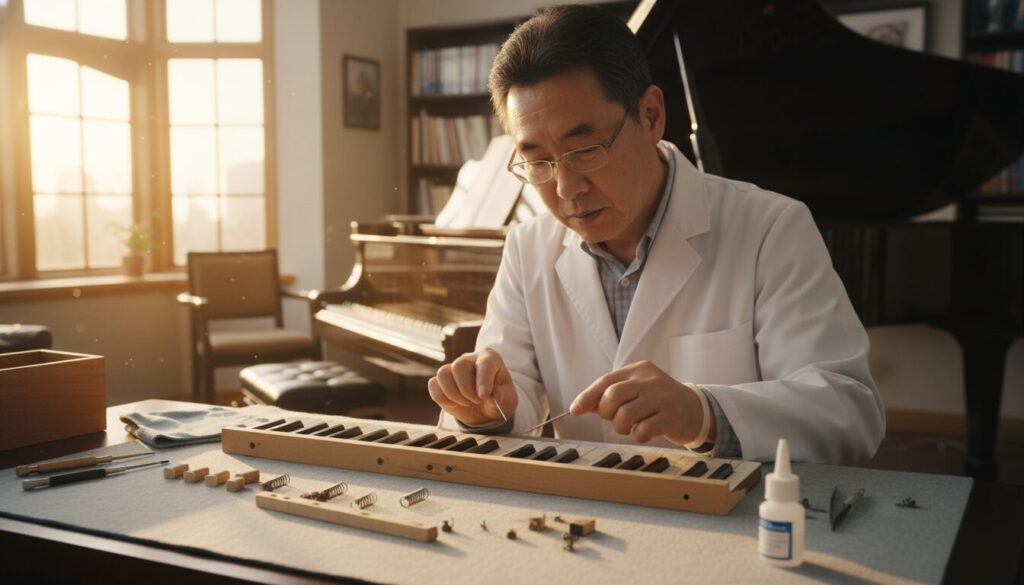
Have you ever found yourself in the middle of a beautiful melody, only to be interrupted by a stubborn piano key that just won’t cooperate? This common frustration can disrupt the playing experience for pianists across Canada.
A sticky key is often a minor issue, but it can signal underlying problems with your piano’s condition. Understanding the root cause is crucial. Whether it’s a simple DIY cleaning or a more complex repair, the cost to resolve this issue can vary widely.
Before you call a technician, it’s essential to grasp the problem. This knowledge can save you both time and money. Regular maintenance and proper care can prevent most sticky key issues from occurring in the first place.
This guide will walk you through the causes of sticky keys, self-diagnosis, at-home fixes, and a detailed cost breakdown tailored for Canadian readers. For professional services, visit www.vestapiano.ca, a trusted resource for piano repairs and expert referrals.
Key Takeaways
- Sticky keys can ruin your playing experience but are often easy to fix.
- Understanding the problem before calling a technician can save you money.
- Regular maintenance helps prevent sticky key issues.
- Costs for repairs can range significantly based on the underlying cause.
- Professional services can provide reliable solutions for complex issues.
Understanding Why Piano Keys Become Sticky
The joy of playing can quickly turn to frustration when a piano key refuses to respond. Several factors contribute to this common issue, and understanding them is essential for effective solutions.
One significant factor is the impact of humidity and climate. In Canada, dramatic seasonal shifts can lead to fluctuations in humidity and temperature. Pianos thrive in a controlled environment, ideally at 70 degrees Fahrenheit and 42% humidity. When conditions stray from this ideal, wooden components can swell or contract, leading to sticking keys.
High humidity levels can cause the natural wood in pianos to absorb moisture. This results in enlarged parts that rub against each other, restricting free key movement. The optimal humidity range for pianos is between 40 and 60 percent, along with a stable temperature of 17 to 21 degrees Celsius. Maintaining these conditions is crucial to prevent sticking piano problems.
Another common cause of sticky keys is debris and foreign objects that find their way inside the piano. Items like coins, paper clips, and food particles can create immediate key blockage or gradual resistance. Such debris can lodge between keys, under the key bed, or within the action mechanism, leading to inconsistent key response or complete obstruction.
Mechanical wear and alignment issues also play a role in the condition of piano keys. Over time, felt bushings on balance rail pins can wear down, and leather parts in the action may become damaged. Weakened jack springs, bent or corroded balance rail pins, and misaligned key slips can all contribute to sticking keys. Since piano action parts are regulated to within one-thousandth of an inch, even minor mechanical issues can lead to significant playing problems.
Understanding these root causes helps determine whether a repair is a simple DIY fix or requires professional attention. For expert diagnosis and assistance, visit www.vestapiano.ca, a trusted resource for piano repairs.
Diagnosing Your Sticky Piano Key Problem
A piano’s beauty can be overshadowed by the annoyance of a key that refuses to budge. Diagnosing the issue is the first step toward restoring your instrument’s harmony. By following a systematic self-diagnosis checklist, you can identify whether the problem stems from humidity, debris, or mechanical failure.
Self-Diagnosis Checklist
Start by asking yourself some key questions:
- When did the key first start sticking?
- Has there been a significant change in temperature or humidity recently?
- Did you leave anything on the keyboard that might have fallen inside?
- When was the piano last serviced?
These questions can provide valuable clues about the cause of the sticking key problem. Often, the issue arises due to a change in climatic conditions.
Next, visually inspect the piano keys. Look between the keys and gently press each one to identify which specific keys are affected. This step is crucial for determining whether the problem is localized or widespread.
When DIY Repairs are Possible
Check if the key slip is pressing against the front of the white keys. This common issue is often easily fixable. If the problem affects a single key, it may be a simple obstruction. However, if multiple keys are sticking, it could indicate humidity-related swelling rather than debris.
If you hear unusual sounds when pressing the sticking key, this may signal a deeper issue with the hammers or internal action parts. In such cases, professional diagnosis is advisable.
DIY repairs are feasible when you can clearly see an object lodged between keys or if humidity is the obvious culprit that can be managed at home. However, if cleaning does not resolve the problem, or if you notice signs of rust or corrosion, it’s time to call a qualified piano technician.
For expert assistance, visit www.vestapiano.ca. This trusted Canadian resource can connect you with experienced technicians who can accurately diagnose and repair sticking piano key issues.
How to Fix Sticky Piano Keys at Home
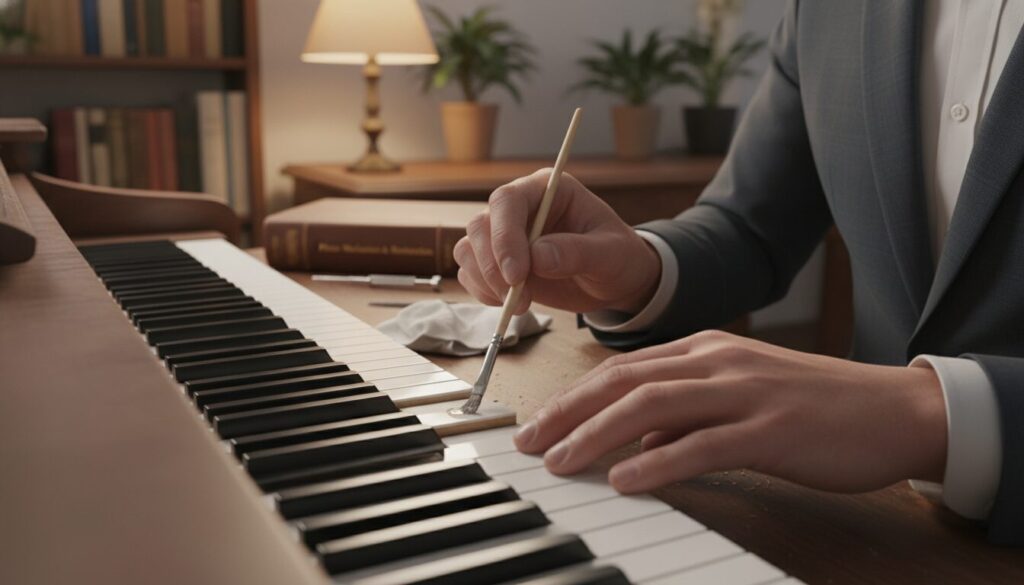
A beautiful performance can be marred by the irritation of a key that refuses to cooperate. Fortunately, there are effective ways to address this issue at home. By following some practical steps, you can restore your piano’s functionality and enjoy playing again.
Cleaning and Removing Obstructions
Start by inspecting the keys for visible debris. Press each key to identify which ones are sticking. For cleaning, use a microfiber cloth dampened with lukewarm water and a small amount of mild dish soap. Wipe the keys from back to front using vertical strokes. This technique helps avoid moisture getting trapped between the keys.
After cleaning, use a second cloth with clean water to remove any soap residue. Always dry the keys completely. Avoid cleaners with alcohol, chlorine, ethanol, benzene, peroxide, or salts, as these can damage both the key surfaces and the internal parts of the piano.
If you notice visible obstructions like coins or paper clips, hold down adjacent keys. Gently work the stuck key to dislodge the object without forcing it. This method helps avoid potential damage to the action mechanism.
Managing Room Humidity and Temperature
Humidity plays a significant role in the condition of your piano. Aim to maintain room humidity between 40% and 60%. Use a digital hygrometer to monitor conditions. If humidity levels fluctuate, consider investing in a Dampp-Chaser humidity control system or a slow-release piano heater bar. These devices help maintain stable conditions inside the piano throughout the changing seasons in Canada.
For humidity-related sticking, press the affected key firmly but slowly. Gently move it from side to side while depressing it. This technique helps the felt bushings self-compact, easing the sticking.
Quick Fix Techniques
If the key slip is causing issues, you can address it easily. Unscrew the two key blocks located at both ends of the key slip. Gently work it out and clean any accumulated dust and debris underneath. Reinstall it without over-tightening the screws to avoid further issues.
Additionally, dirty or rusty rail pins can affect key movement. Clean them with a soft cloth to remove debris. Then, apply a small amount of lubricant down the front of each rail pin and balance pin. This maintenance can restore smooth key movement.
If these home fixes do not resolve the sticking keys, it’s best to contact a professional piano technician. Visit www.vestapiano.ca for expert assistance and supplies to help with your piano repairs.
How Much Does It Cost to Fix a Sticky Piano Key? Cost Breakdown and Factors
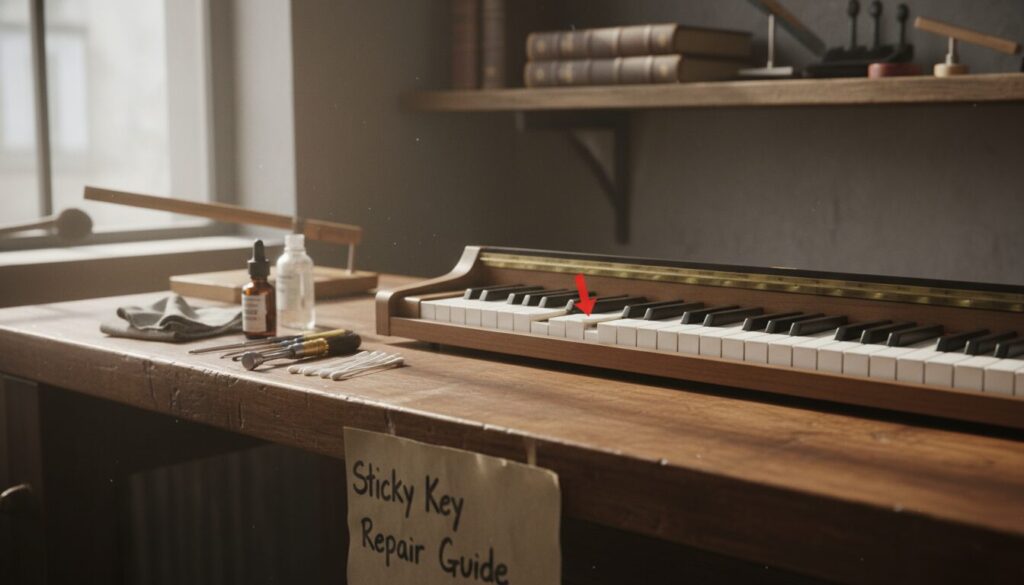
Playing the piano should be a joyful experience, but a key that sticks can quickly change that. Understanding the costs associated with repairs is crucial for pianists in Canada. The expenses can vary significantly based on the nature of the problem and the services required.
Typically, the cost for fixing a sticky key can range from $100 to $250 for a simple cleaning or minor adjustment. More complex mechanical repairs may escalate to between $500 and $3,500, depending on the severity of the issue.
Typical Repair Cost Ranges in Canada
For standard repairs, the overall cost spectrum generally runs from $500 to $3,500. Serious action rebuilds or part replacements may exceed this range. However, a single sticky key usually falls on the lower end of this spectrum, making it a manageable expense for most pianists.
Cost Influences: Parts, Labor, and Severity
Several factors influence the total repair cost. Labor costs vary across Canadian provinces, with technicians charging hourly rates based on their experience and the complexity of the repair work. The root cause of the sticking key also plays a significant role. Whether it involves simple foreign object removal, humidity-related adjustments, or mechanical wear requiring replacement parts, each scenario carries different costs.
Potential Additional Expenses: Tuning and Replacement Parts
After addressing sticky keys, it’s often recommended to schedule a full piano tuning. This service typically costs between $100 and $150 in Canada. Since sticky key issues often coincide with the piano being out of tune, this additional expense is worth considering.
Replacement parts, such as felt bushings or balance rail pins, can also add to the total repair cost. These components are essential for restoring the piano to its optimal playing condition. Additionally, pianos in poor overall condition with multiple sticky keys, rust, or significant mechanical wear will require more extensive repairs and higher costs than a single key issue.
Regular maintenance and tuning can prevent many sticky key problems. New pianos typically need four tunings in the first year, while established pianos should have at least one tuning annually. For accurate, localized cost estimates and to connect with qualified piano technicians, visit www.vestapiano.ca.
Hiring a Piano Technician in Canada: When and How
Encountering a non-responsive piano key can be a disheartening experience for any musician. Knowing when to seek professional help is essential for maintaining your instrument’s condition and ensuring a smooth playing experience.
Signs You Need Professional Help
There are clear indicators that suggest it’s time to call in a piano technician. Look for these signs:
- Keys remain stuck even after thorough cleaning.
- Multiple keys are affected simultaneously.
- Visible rust or corrosion on rail pins or internal parts.
- Strange sounds when pressing keys.
- The problem persists despite proper humidity control.
Attempting complex repairs on your own can lead to further damage. It’s often more cost-effective to seek professional intervention.
Finding Qualified Piano Technicians Locally
Finding a good piano technician can be straightforward if you know where to look. Here are some practical strategies:
- Contact local music studios that specialize in recording acoustic instruments and ask who services their pianos.
- Reach out to the local Symphony Orchestra for recommendations.
- Consult music schools and band directors for technician referrals.
- Ask local churches who maintain their pianos.
- Connect with music colleges that regularly service multiple pianos.
Utilizing these resources can help you locate experienced technicians who can address your piano’s needs.
Scheduling Regular Maintenance and Tuning
Regular maintenance is crucial for preserving your piano’s condition. New pianos require four tunings in the first year, while established pianos should have at least one tuning annually. For instruments exposed to frequent humidity changes, consider scheduling tuning twice yearly.
A well-trained technician can help lengthen your piano’s lifespan by catching minor issues before they escalate into costly repairs. It’s advisable to have a technician evaluate your piano’s overall condition every second tuning appointment.
Investing in professional piano care and regular tuning services not only prevents sticky keys but also ensures a consistent, enjoyable playing experience. For reliable connections to qualified piano technicians, visit www.vestapiano.ca, your go-to resource in Canada.
Conclusion
The joy of music can quickly fade when faced with the challenge of a stubborn piano key. Understanding the causes of sticky keys is essential. From humidity fluctuations to foreign objects, many issues can be resolved with the right approach.
Costs for repairs can vary. Simple DIY fixes are often affordable, while professional services may range from $100 to several hundred dollars. Regular care, including cleaning and tuning, can prevent these issues before they arise.
Remember, playing on a piano with sticky keys can lead to bad habits. Seeking help promptly ensures your technique remains intact. Keep your piano technician’s contact information handy for quick access to expert assistance.
For all your piano repair, tuning, and maintenance needs in Canada, visit www.vestapiano.ca. A well-maintained piano offers a joyful, frustration-free playing experience.
FAQ
What causes piano keys to stick?
Sticky keys can result from humidity, debris, or mechanical wear. High humidity can cause wood to swell, while dust and foreign objects can obstruct movement.
Can I fix sticky keys myself?
Yes, some minor issues can be resolved at home. Cleaning the keys and checking for obstructions are good starting points.
How often should I have my piano tuned?
It’s recommended to tune your piano at least twice a year. Regular maintenance helps prevent issues like sticky keys and ensures optimal performance.
What are the signs that I need a professional technician?
If sticky keys persist despite cleaning or if you notice other mechanical issues, it’s time to consult a professional piano technician.
How much should I expect to pay for professional repairs?
Repair costs can vary widely based on the severity of the issue and the technician’s rates. Typically, you might see costs ranging from 0 to 0.
Are there additional costs associated with piano repairs?
Yes, additional expenses may include tuning and replacement parts, which can add to the overall repair cost.
How can I maintain my piano to prevent sticky keys?
Keeping your piano in a controlled environment with stable humidity and temperature can help. Regular cleaning and maintenance are also essential.